For readers comparing image to stl tools, this review shows how Tripo AI 3D and SupaVoxel differ in reconstructed detail, file size, textures, memory use, and delivery speed from the same source photograph.
This is an independent test. Nothing here came from vendor access: both tools were used on my own free and paid accounts.
My verdict in 60 seconds — Tripo 62/100, SupaVoxel 89/100
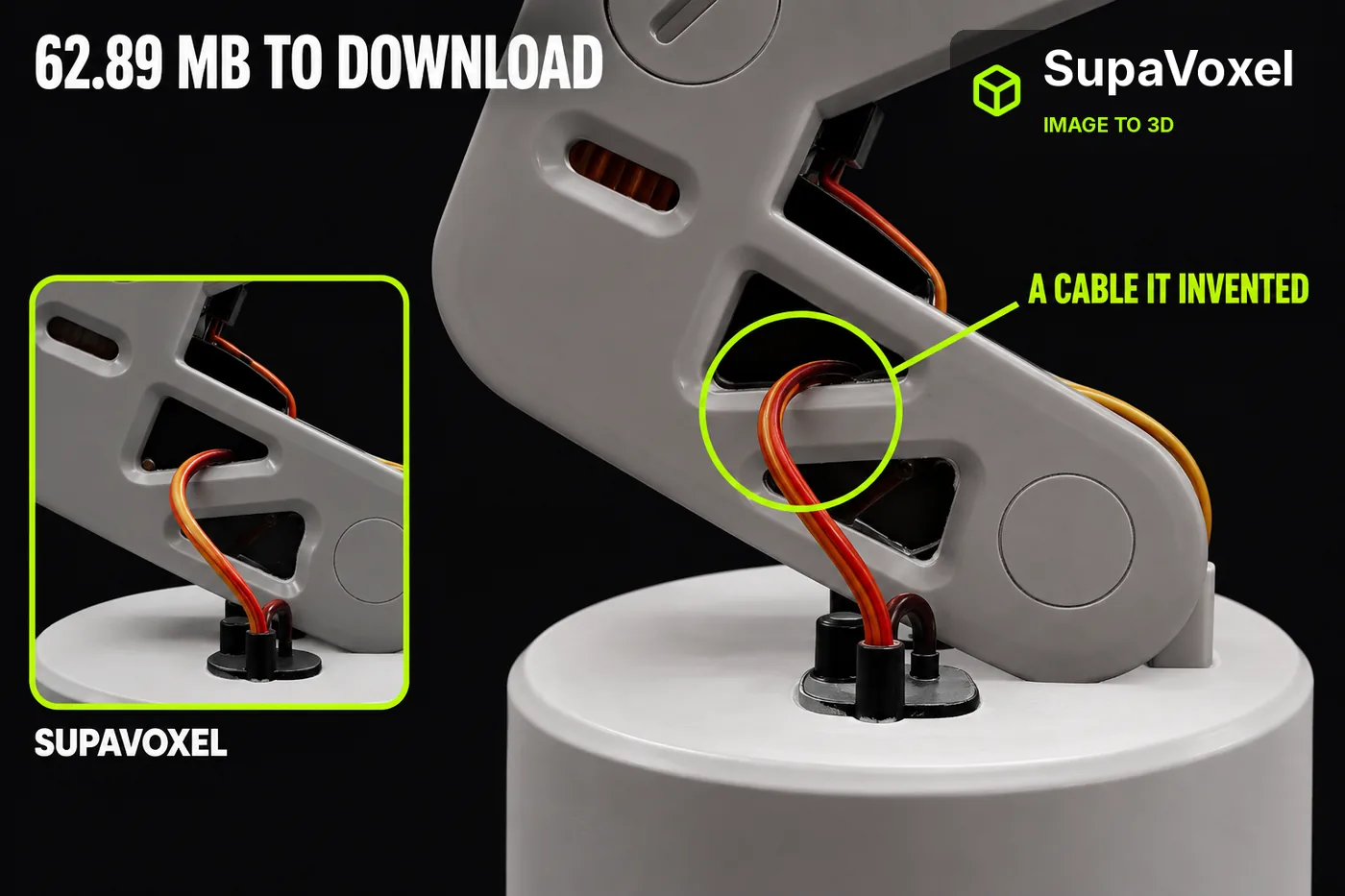
One photograph of a desktop robotic arm, run once through Tripo and once through SupaVoxel at stock defaults, then both results rendered offline from identical cameras under identical lighting. On likeness this is the closest case in my series: both products built the windows, both kept the cable, both kept the plates flat. Tripo won a real row here — it separated the three-colour servo loom into three distinguishable tubes where SupaVoxel welded them into one. It then handed me 62.89 MB to carry that win, against SupaVoxel's 5.63 MB.
- Cable strands — Tripo three separable tubes with visible gaps · SupaVoxel one thicker two-tone band · Tripo wins, and it is the sharpest win in the case
- Cable standoff from the body — Tripo max 4.158 mm · SupaVoxel max 10.337 mm · 2.49×, the SupaVoxel run genuinely bridges air
- GLB on disk — Tripo 62,888,224 B · SupaVoxel 5,627,132 B · 11.18×
- Bytes per triangle — Tripo 32.18 B · SupaVoxel 5.64 B · 5.70×
- Texture set — Tripo 3 × 4096² = 6,773,618 B · SupaVoxel 3 × 2048² WebP = 586,638 B · 11.55×; Tripo's resolution is the better one for close-up material work
- First load on 12 Mbps mobile — Tripo 41.93 s · SupaVoxel 3.75 s
- CDN at 10,000 loads/month, $0.085/GB — Tripo $53.45 · SupaVoxel $4.78 · $584.06 a year apart
- Geometry VRAM — Tripo 56.11 MB · SupaVoxel 28.71 MB · 1.95×
Three things before the detail. Tripo really does resolve the loom better, and if you need a wiring diagram or a multi-colour paint job, that row is not one anybody can talk away. On the back — a surface the photograph never shows — both products invented, and Tripo invented more, including a cable with no reference at all. And Tripo's 4096² texture set is 61.3% maps a printer never reads.
For putting this arm on a product page I would use the SupaVoxel file: 3.75 s to first paint against 41.93 s, and a CDN line one eleventh the size.
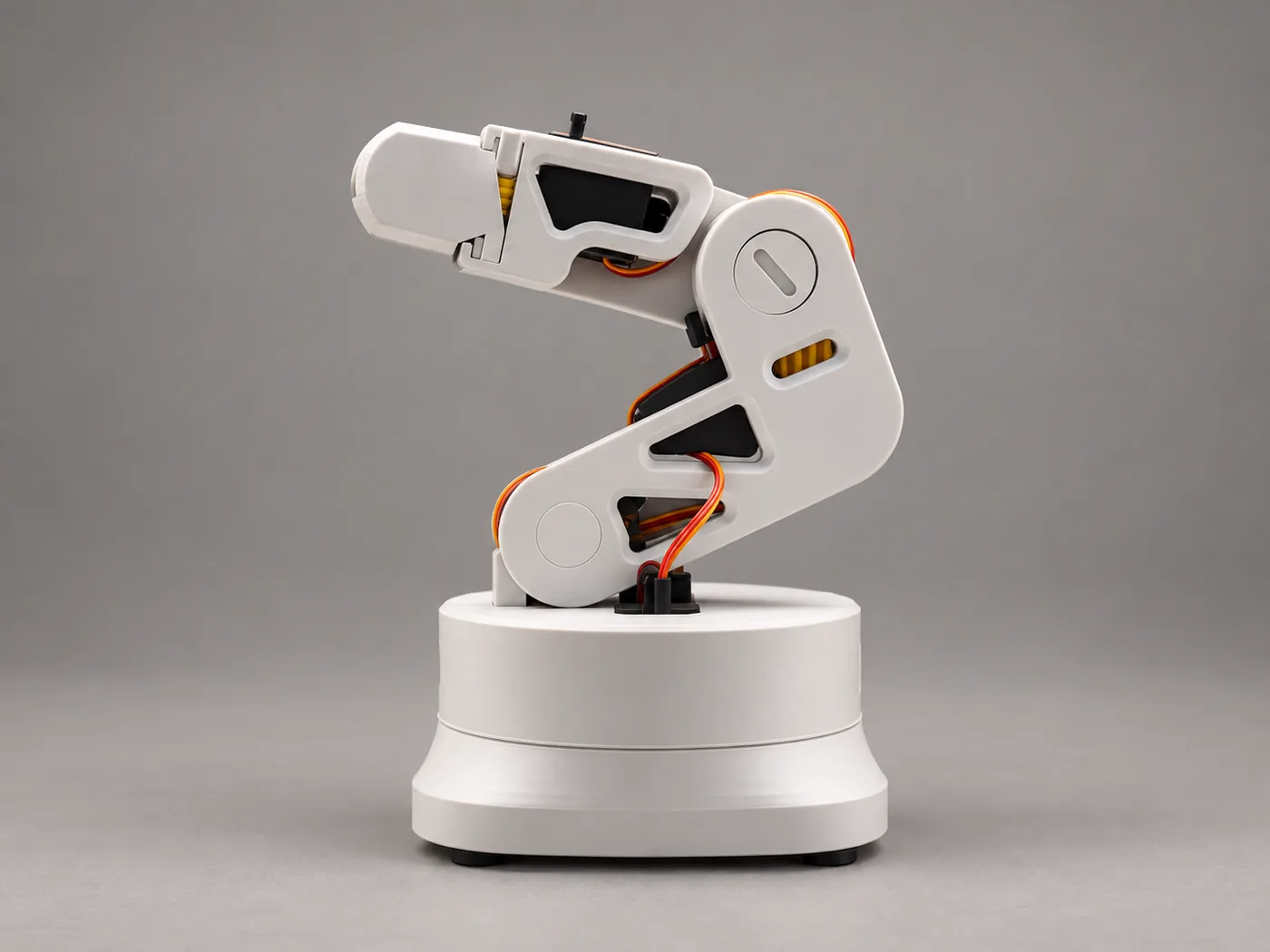 The single input, 1,403,490 bytes, one side only. Everything about the back of this object is invention on both sides, and the two sections below hold each product to that.
The hero shot: where Tripo's extra triangles actually landed
Both models are rendered from the same camera with the same lights. Above the shoulder, SupaVoxel's loom reads as two runs pressed together — effectively one two-tone tube. Tripo's reads as three: yellow, orange, red, each with its own highlight and a visible gap between them.
Further down over the lower link plate, SupaVoxel's becomes a single orange tube crossing the triangular window with nothing beneath it. That crossing is where the 10.337 mm standoff measurement comes from — it is genuinely airborne. Tripo's three runs stay parallel and close to the chassis, peaking at 4.158 mm.
Two sentences settle the case: Tripo wins on strand separation, SupaVoxel wins on span. Neither is a failure.
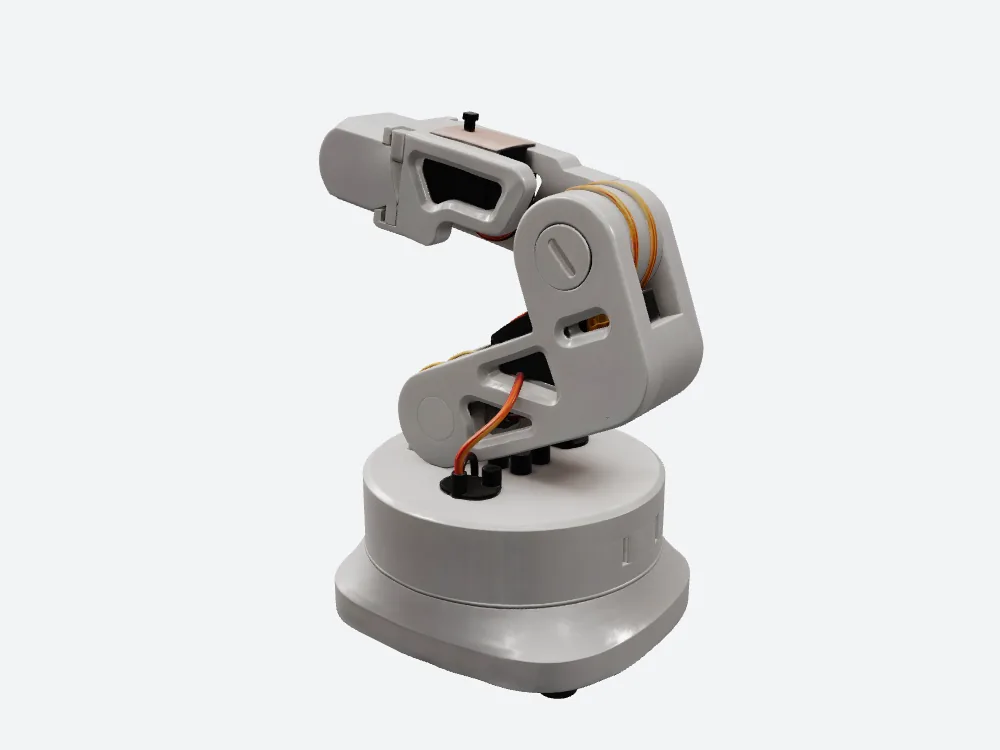 SupaVoxel, three-quarter hero. One two-tone tube above the shoulder, one orange tube bridging the triangular window unaided.
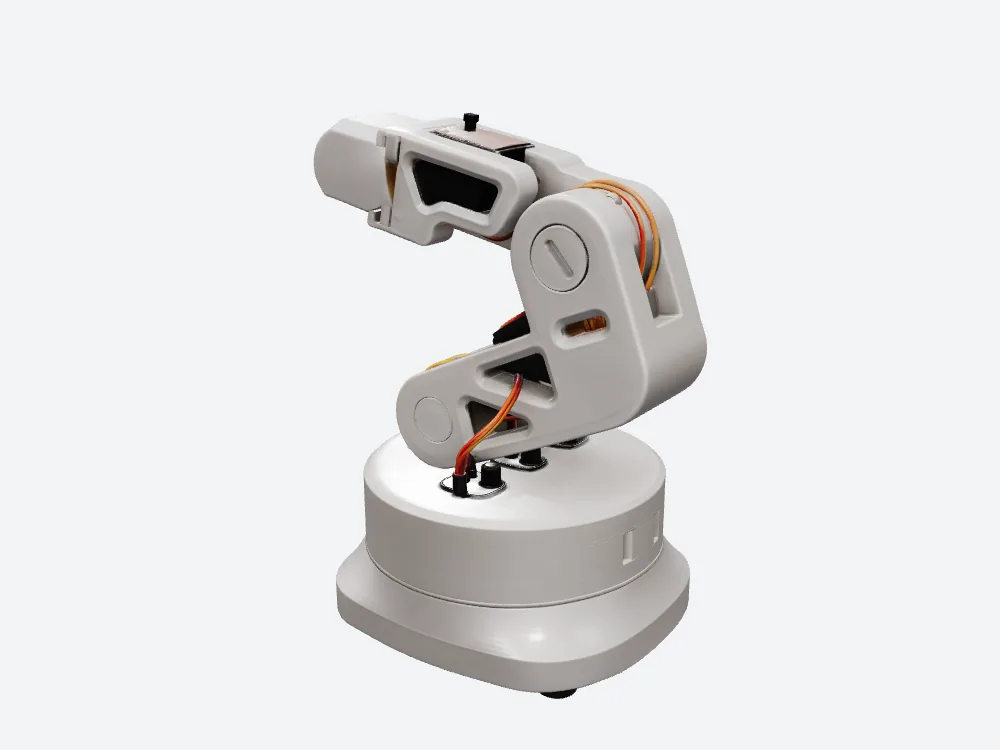 Tripo at the identical camera. Three strands above the shoulder with gaps between them, and three parallel runs along the lower plate. This is what 1.96× the triangles bought, and it is a genuine gain.
Top-down: two rings against one continuous band
From above, the wrap of cable around the shoulder cylinder is the clearest single comparison in the case. SupaVoxel's reads as one continuous orange band encircling the cylinder — no strands, no gaps. Tripo's is two separate rings, one orange and one slightly darker, with visible space between them.
Tripo also puts two small white dots on the wrist panel that the SupaVoxel version renders as one flat warm-white plane. The photograph is not conclusive at that scale, so I am not scoring it either way.
Second-order number: this separation cost 957,156 extra triangles and 57.26 MB.
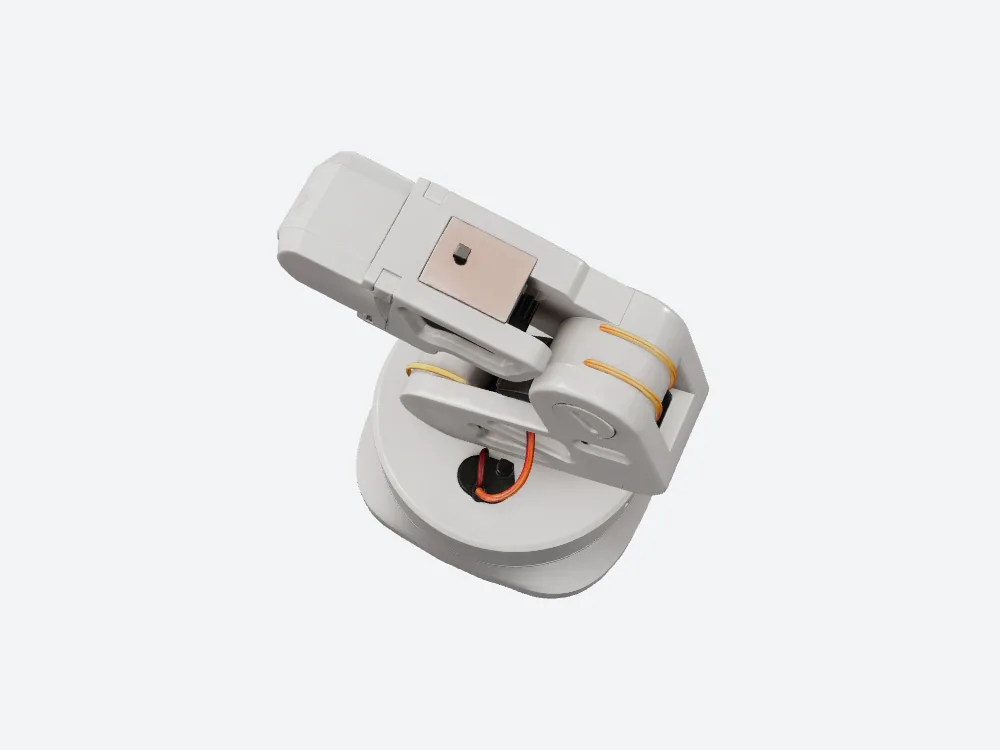 SupaVoxel from above. The elbow wrap is one continuous orange band; the wrist panel is a single flat warm-white surface; one black connector at the centre of the base.
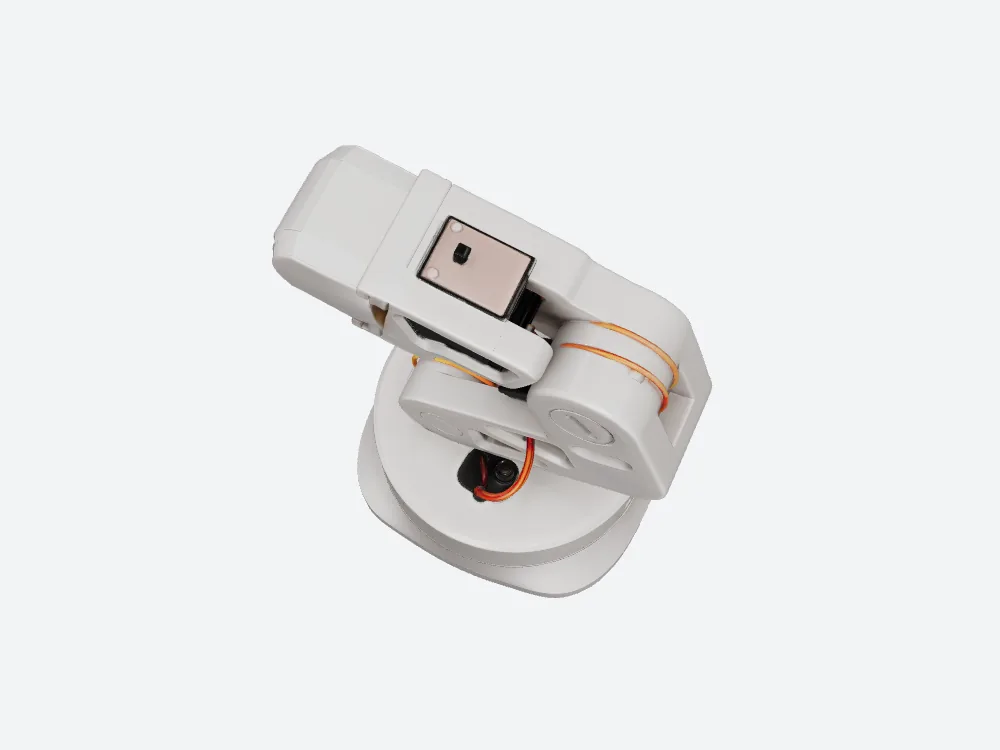 Tripo from above. Two separate rings with a gap, plus two extra white dots on the wrist panel. Tripo's clearest, most legitimate win in this test.
The back of the arm does not exist, and both products made one up
The input photograph shows one side. Everything on the far side of this object is invented by whichever product you paid.
SupaVoxel mirrored the front: a matching triangular window, a rounded-rectangle slot, a disc hub. Its slot is left as a plain dark recess with nothing inside it. Its loom on that face becomes one thicker orange-yellow tube running around the elbow onto a single black connector.
Tripo invented differently and invented more. Inside that same rectangular slot Tripo placed a segment of ridged orange cable — a cable, on a surface no reference image contains. Orange also shows through the inside of the triangular window.
Neither is right, because there is no right. But only one of them added a part that nothing supports.
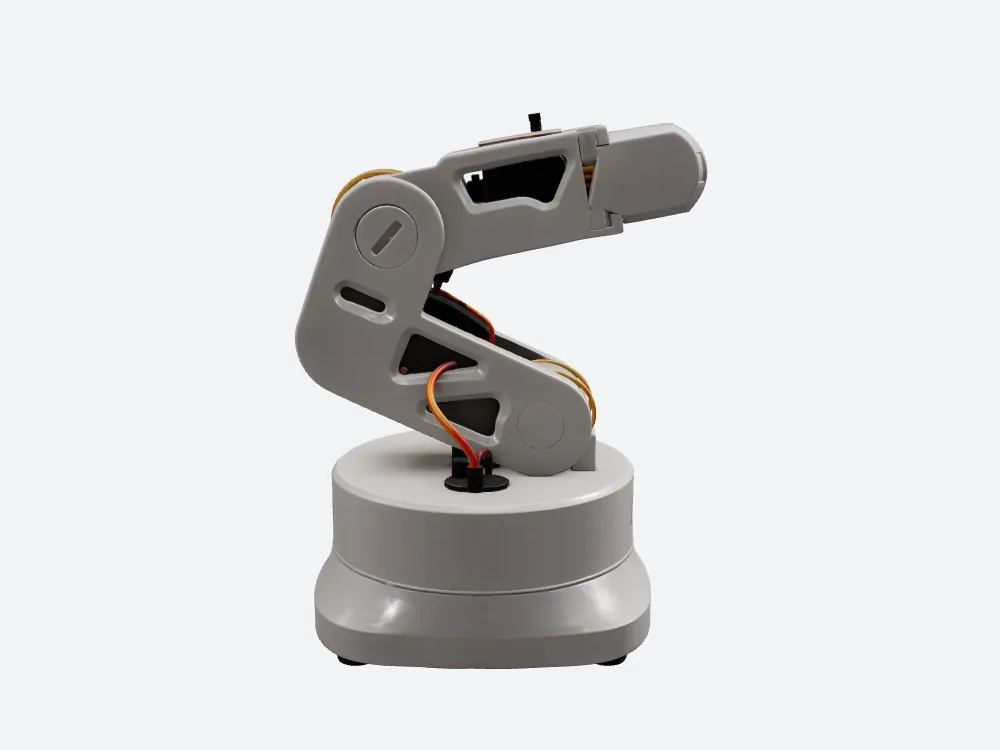 SupaVoxel, rear. Mirrored window set, and the rectangular slot deliberately left as an empty dark recess.
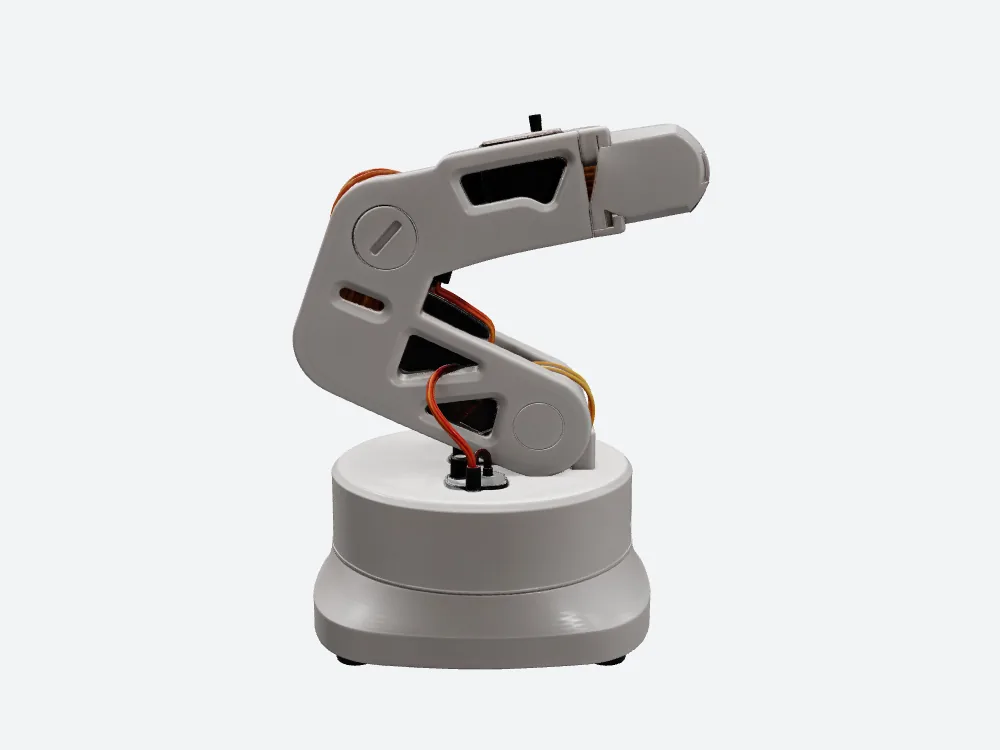 Tripo, same camera. The same slot now contains a ridged orange cable run, and orange bleeds through the triangular window. More invention, on the same absence of evidence.
The zoom that pins it: three clean tubes against a welded band
At close range the split is unambiguous in both directions.
On the SupaVoxel rear zoom the red, orange and yellow runs are pressed into a single band with no visible seam between strands — and just before the connector there is a pale washed-out transition where colour bleeds off the cable. That is a defect, it is SupaVoxel's, and it is in the frame.
On Tripo's rear zoom the same bundle is three round tubes with hard boundaries, a clear dark gap between the red and the orange, and a yellow run tracking separately on the right. Tripo's rectangular slot holds its invented ridged cable; the SupaVoxel slot is empty and clean-bottomed.
- Strand separation — Tripo 3 resolved tubes · SupaVoxel 1 welded band · Tripo wins
- Colour bleed at the connector — Tripo none observed · SupaVoxel a pale washed transition · Tripo wins
- Invented content in the rear slot — Tripo a ridged cable with no reference · SupaVoxel an empty recess · SupaVoxel wins
- Max standoff from the chassis — Tripo 4.158 mm · SupaVoxel 10.337 mm · p90 1.670 mm against 4.551 mm
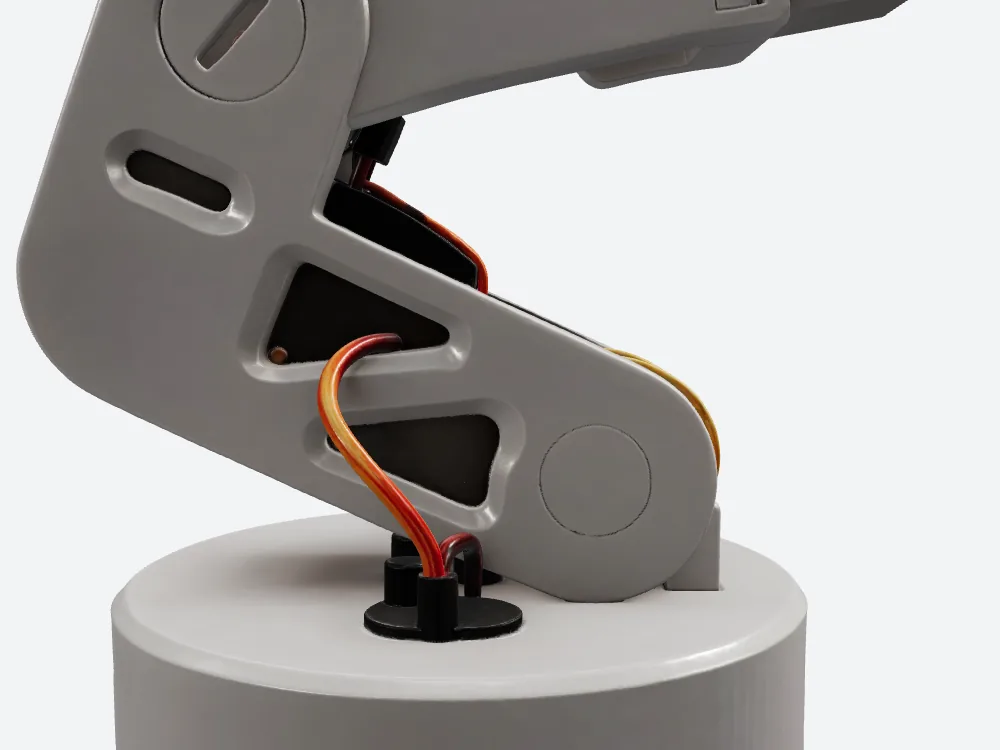 SupaVoxel, rear zoom. One band, no strand seams, and a pale colour-bleed transition before the connector — recorded, not cropped out.
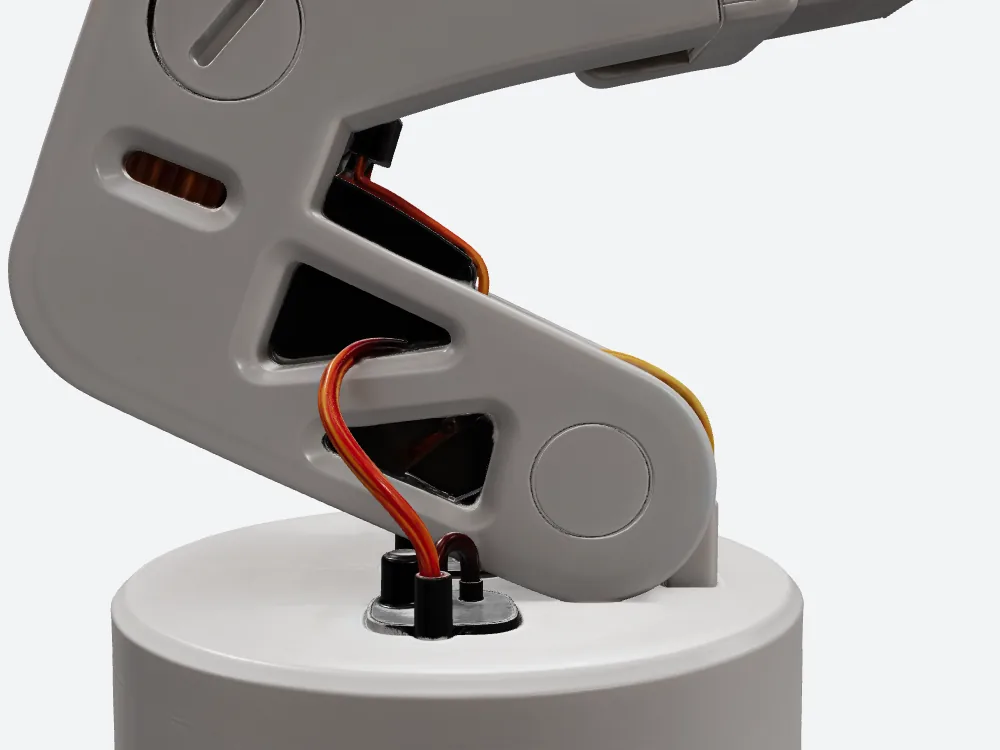 Tripo, same crop. Three hard-edged tubes with a dark gap between red and orange, and the invented ridged cable lying in the slot the SupaVoxel version left empty.
32.18 bytes per triangle against 5.64
Here is where Tripo's win gets expensive. Tripo's file spends 32.18 bytes on every triangle; SupaVoxel's spends 5.64. That is 5.70× worse byte efficiency, and it is not geometry — it is texture policy plus shipping the mesh uncompressed.
The SupaVoxel GLB lists EXT_meshopt_compression and KHR_mesh_quantization as required extensions. Tripo's lists KHR_materials_volume and FB_ngon_encoding, neither of which saves a byte.
- Triangles — Tripo 1,954,511 · SupaVoxel 997,355 · 1.96×
- Vertices — Tripo 1,020,577 · SupaVoxel 523,138 · welded, 977,185 against 498,561
- GLB bytes — Tripo 62,888,224 · SupaVoxel 5,627,132 · 11.18×
- Bytes per triangle — Tripo 32.18 · SupaVoxel 5.64 · 5.70×
- Geometry VRAM (verts × 32 B + indices × 4 B) — Tripo 56.11 MB · SupaVoxel 28.71 MB
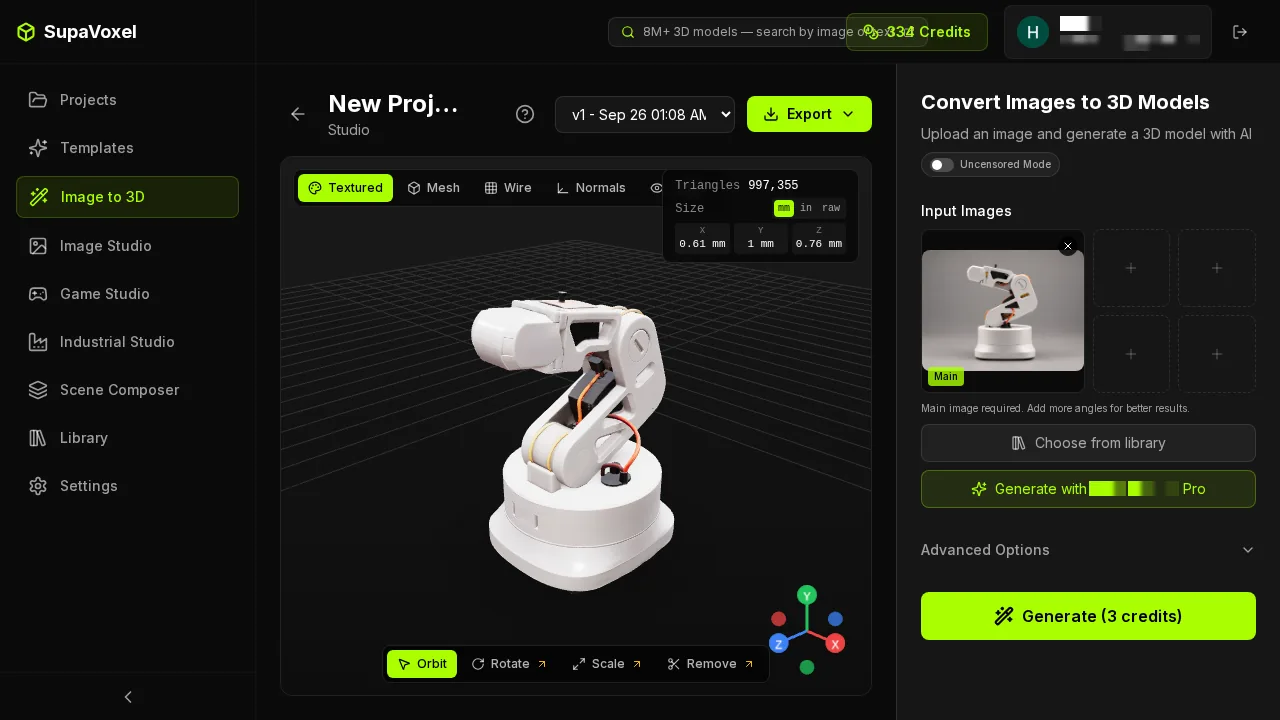 SupaVoxel's result screen. The panel's Triangles reads 997,355 against my parsed 997,355, and Size 0.61 / 1 / 0.76 against a raw bounding box of 0.6088 / 1.0 / 0.7610. Four inspection modes plus X-Ray sit along the top of the viewport.
The texture set: Tripo's is sharper, and 61.3% of it is unprintable
Tripo gives you three 4096² maps totalling 6,773,618 bytes. SupaVoxel gives three 2048² WebP maps totalling 586,638 bytes. For close-up material rendering Tripo's resolution is better and SupaVoxel cannot match it — that row belongs to Tripo, at 7.59× on baseColor alone.
For anything that ends on a build plate, the split is unkind. baseColor is the only map a slicer might consult: Tripo 2,619,411 B, SupaVoxel 345,278 B. The rest — metallicRoughness and normal — is 4,154,207 B on Tripo's side against 241,360 B on SupaVoxel's. That is 61.3% of Tripo's texture payload going nowhere, and Tripo's normal map alone at 2,676,872 B is 4.56× the size of SupaVoxel's entire texture set.
Second-order number: on a white print, both baseColor maps are worth exactly zero, and one of them costs you 2.62 MB.
Download time and the CDN bill
Take the two files to a product page.
- 12 Mbps mobile, first load — Tripo 41.93 s · SupaVoxel 3.75 s
- 100 Mbps home, first load — Tripo 5.03 s · SupaVoxel 0.45 s
- CDN at 10,000 loads/month, $0.085/GB — Tripo $53.45 · SupaVoxel $4.78
- Same bill over a year — Tripo $641.46 · SupaVoxel $57.40 · $584.06 apart
- Geometry VRAM on the device — Tripo 56.11 MB · SupaVoxel 28.71 MB
Forty-two seconds is not a slow load, it is an abandoned page. And 56.11 MB of geometry VRAM is where a low-end phone drops the tab entirely.
The exchange rate for Tripo's three separated cable strands: 38.18 extra seconds on mobile, $48.67 a month in delivery, and 27.4 MB more VRAM per visitor.
One place the SupaVoxel file is harder to open than Tripo's
SupaVoxel's compression has a cost and it is fair to name it. Because its GLB puts EXT_meshopt_compression and KHR_mesh_quantization in extensionsRequired, an older toolchain without a meshopt decoder cannot read it directly — it needs one pass through a converter first. Tripo's two extensions are both optional, so Tripo's file opens in more places out of the box.
The same thing tripped my own measuring rig: SupaVoxel's UVs are uint16-normalised and have to be divided by 65535 before any texture sampling, or every colour test silently returns nothing. The cable test nearly read as "no cable exists" because of it.
Wireframe close-ups are worthless at this density, on both sides
I rendered matched wireframe zooms for both models and they prove nothing, so here they are with that said out loud.
At 997,355 triangles the SupaVoxel wireframe fills the silhouette to near-black with a few white specks near the triangular window — a 44.7 KB PNG. Tripo's at 1,954,511 triangles is blacker and flatter and compresses to a smaller 32.6 KB PNG, because uniform noise compresses well.
That pair is the most honest picture of 1.96× the triangles that exists: to the eye it is only darker. The real difference shows up in the hero and top-down shots, on the strands.
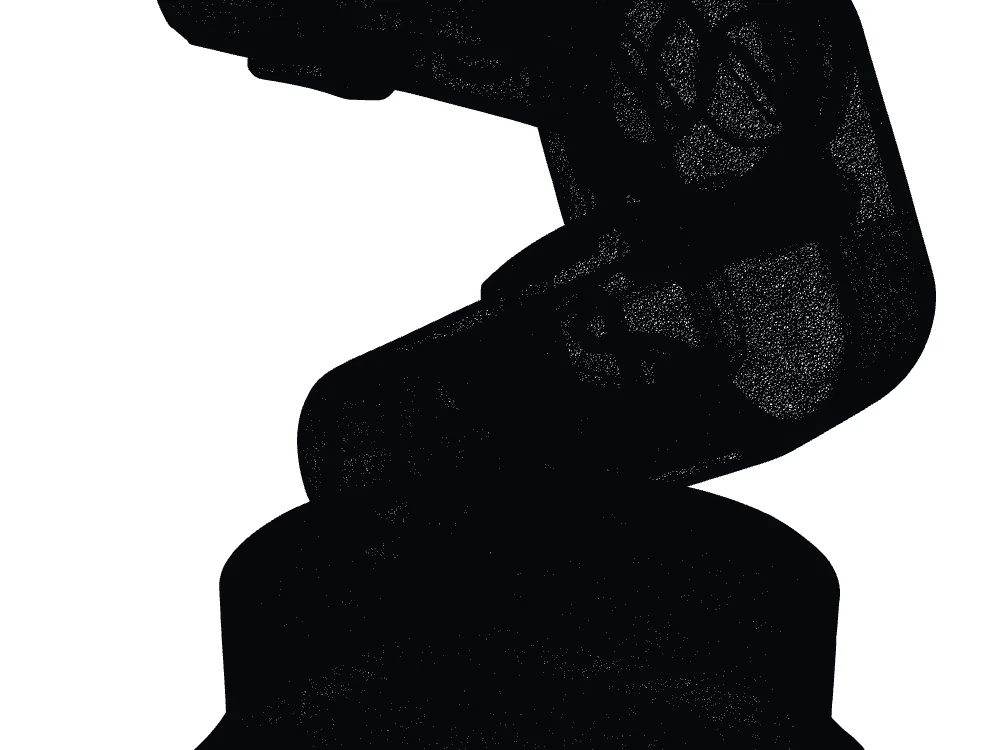 SupaVoxel wireframe zoom, 44.7 KB PNG. Near-solid. No structure readable.
 Tripo wireframe zoom at the same magnification, 32.6 KB PNG — darker, flatter, and smaller on disk. 1.96× the triangles, zero visible structural difference.
What 57.26 MB bought
Tripo's extra 57.26 MB and 957,156 triangles bought three separated cable strands, two rings instead of one band on the shoulder wrap, a 4096² texture set that is genuinely better for close-up rendering, and a cable invented on a face nobody photographed.
They did not buy a larger window opening (SupaVoxel's are ~15% larger in area), a cable that stands further off the chassis (SupaVoxel's reaches 2.49× further), a faster page, a smaller CDN bill, or any structure visible in a wireframe.
Final verdict: Tripo scores 62/100 on likeness and payload
Tripo earns its likeness score here. Three separable strands where SupaVoxel welded one band, no colour bleed at the connector, and a texture set at twice the resolution — those are Tripo's rows, cleanly. Tripo then charges 62.89 MB for them, of which 4,154,207 bytes of texture can never be printed, and turns a product page into a 41.93-second mobile wait and a $641.46 annual CDN line.
SupaVoxel scores 89/100: 5.63 MB, 3.75 s on mobile, $4.78 per 10,000 loads, half the VRAM, larger openings and a cable that genuinely spans air — against a welded loom, a colour bleed I left in frame, 2048² textures, and a file an old toolchain has to convert first. This is the case where both products pass, which puts the whole decision on what the win costs to deliver.
Which one I would use for this job
Same photograph, 3 credits, 5.63 MB, 3.75 s to first paint on mobile, $4.78 per 10,000 page loads, half the geometry VRAM — supavoxel.com. Bring your own reference, and pull both files onto a phone before you decide; that measurement takes under a minute and it is the one your visitors will feel.
Originally published on Medium: Tripo AI 3D Review 2026: 62.89 MB and a 41.9-Second Download.