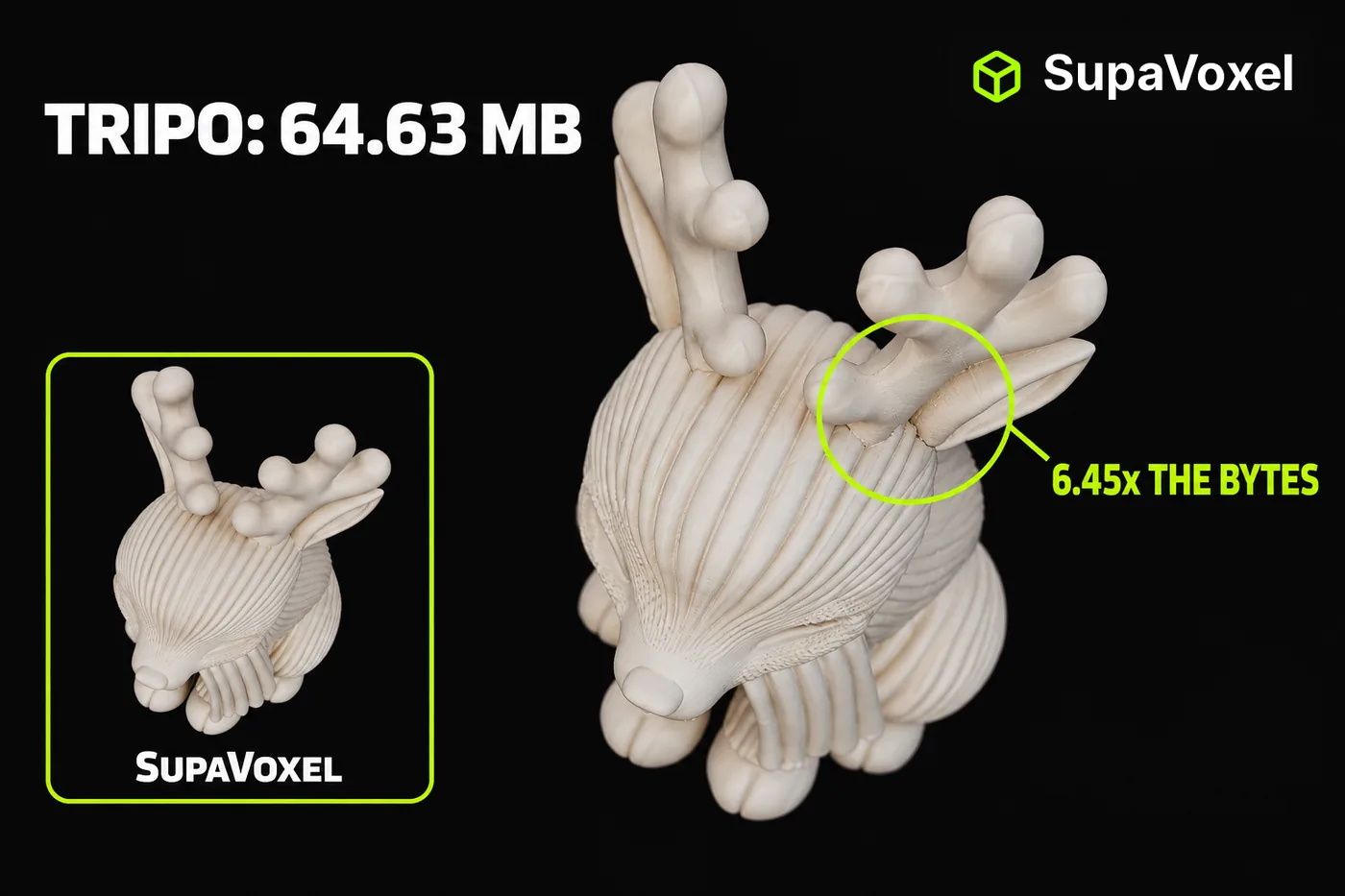
This is an independent test. Nothing here came from vendor access: both tools were used on my own free and paid accounts.
My verdict in 60 seconds — Tripo 62/100, SupaVoxel 90/100
One photograph of a seated chibi reindeer in a corduroy scarf, handed to two image-to-3D products on the same day on default settings. Tripo returned a 64,627,840-byte GLB. SupaVoxel returned 10,021,440 bytes. That is 6.45× the file for 1.33× the triangles, and the gap is not geometry — it is 5.68 MB of texture maps that nothing in a print pipeline reads, shipped as PNG and JPEG instead of WebP, on top of an uncompressed mesh. On a 12 Mbps connection Tripo's reindeer takes 43.1 seconds to arrive. SupaVoxel's takes 6.7.
Here is the scorecard for this one job: how much you download, and what it looks like when it lands.
- GLB size — Tripo 2/10 (64.63 MB) · SupaVoxel 10/10 (10.02 MB) — 6.45× for the same object
- Bytes per triangle — Tripo 2/10 (32.37 B) · SupaVoxel 10/10 (6.68 B) — Tripo stores each triangle in 4.8× the space
- Texture bytes you cannot print — Tripo 2/10 (5.68 MB) · SupaVoxel 9/10 (0.55 MB) — 10.3×, led by a 3.44 MB PNG normal map
- Texture format — Tripo 3/10 (JPEG + PNG) · SupaVoxel 10/10 (WebP) — same three 4096² maps, 7.74 MB against 1.34 MB
- Download at 12 Mbps — Tripo 2/10 (43.1 s) · SupaVoxel 10/10 (6.7 s)
- Geometry VRAM — Tripo 6/10 (56.9 MB) · SupaVoxel 8/10 (46.4 MB) — closest row on the card
- Detail on the unseen back — Tripo 7/10 (ribbing present, crown smears) · SupaVoxel 9/10 (ribbing intact) — both invented it; one held
- Panel figures match the file — Tripo 10/10 · SupaVoxel 10/10 — neither product inflates its triangle count
Part by part, what is true about the Tripo file:
- Tripo's reconstruction is genuinely sharp: finer, denser ribbing than SupaVoxel's and crisper antler silhouettes in every same-camera pair below.
- Tripo invented the entire back of the head — the input photo never shows it — and produced the same large structures SupaVoxel did, including a ribbed crown, a wrapped scarf and a tail bobble.
- Tripo's 4096² normal map alone is 3.44 MB of PNG, which is more than a third of the entire SupaVoxel GLB.
- Tripo's triangle count is nearly constant across nine cases in this batch, 1,896,372 to 1,996,779 — a fixed house budget, not fidelity scaled to the subject.
For this job — one photo, one file you have to move over a network — use SupaVoxel.
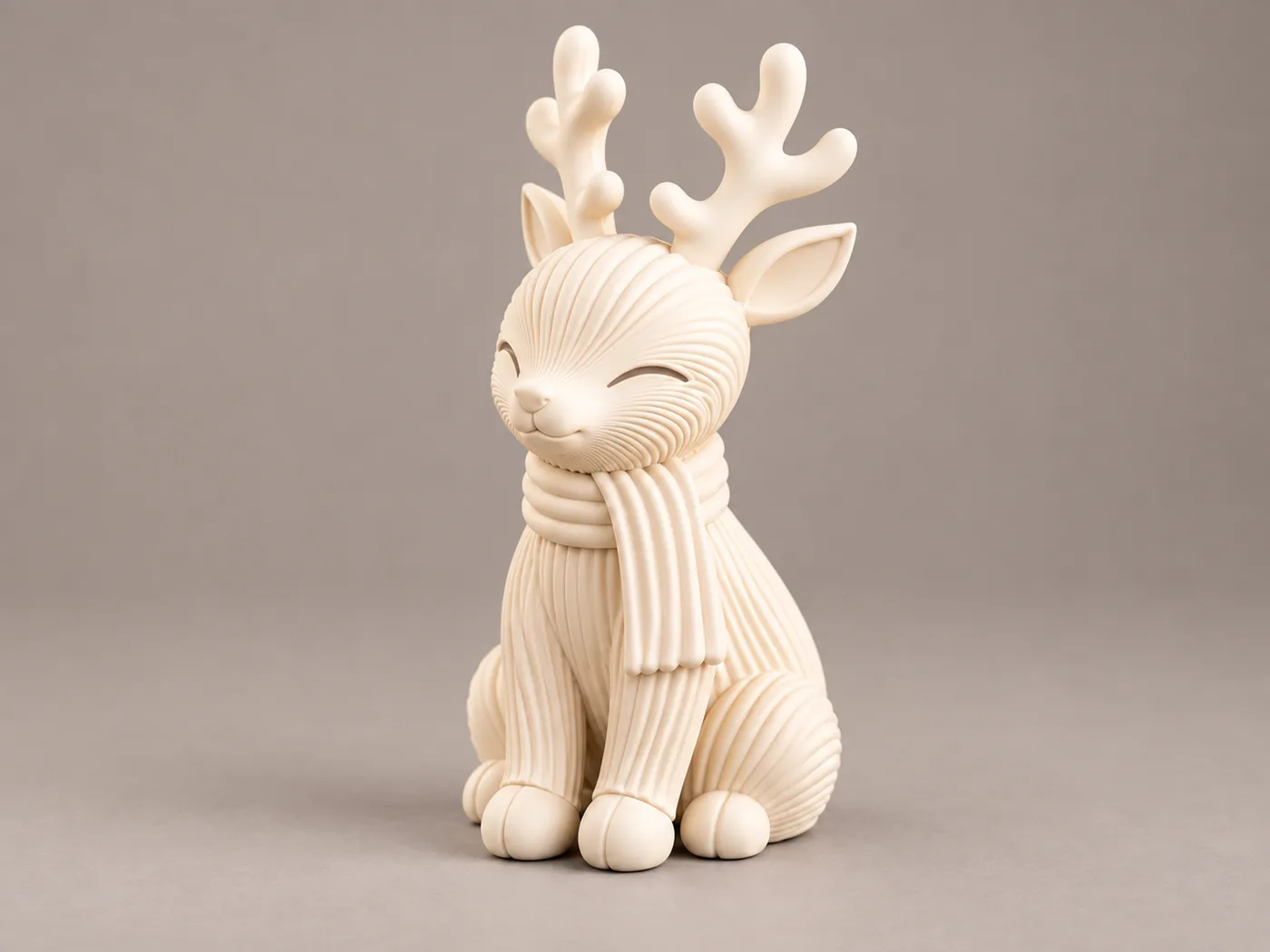 The only input: one 1,517,781 B PNG, sha256 8ba545f2…. A seated chibi reindeer, two branched antlers, two leaf ears, a corduroy scarf wound three times with the tail hanging left, fine ribbing over head, body and hind legs. The camera never sees the back of the head — everything behind the ears in this article was invented by both products.
The test, in one paragraph
One photo, two products, one day, both on shipped defaults — Tripo on Best Quality with Clean Topology off, SupaVoxel on a full model with Inference Steps 5 and Guidance Scale 5.5. Both GLBs were parsed offline; no number here was copied off a panel. Every render pair uses one lighting rig and one set of cameras, corrected for export orientation, so each pair is the same viewpoint rather than two flattering angles.
1.33× the triangles, 6.45× the bytes
Tripo ships 1,996,779 triangles and 1,028,963 vertices. SupaVoxel ships 1,499,386 and 888,016. Tripo has 33% more geometry.
Tripo's file is 545% bigger. Those two numbers cannot both be about geometry, and the rest of this article is the accounting.
- Triangles — Tripo 1,996,779 · SupaVoxel 1,499,386 · 1.33×
- Vertices — Tripo 1,028,963 · SupaVoxel 888,016 · 1.16×
- GLB bytes — Tripo 64,627,840 · SupaVoxel 10,021,440 · 6.45×
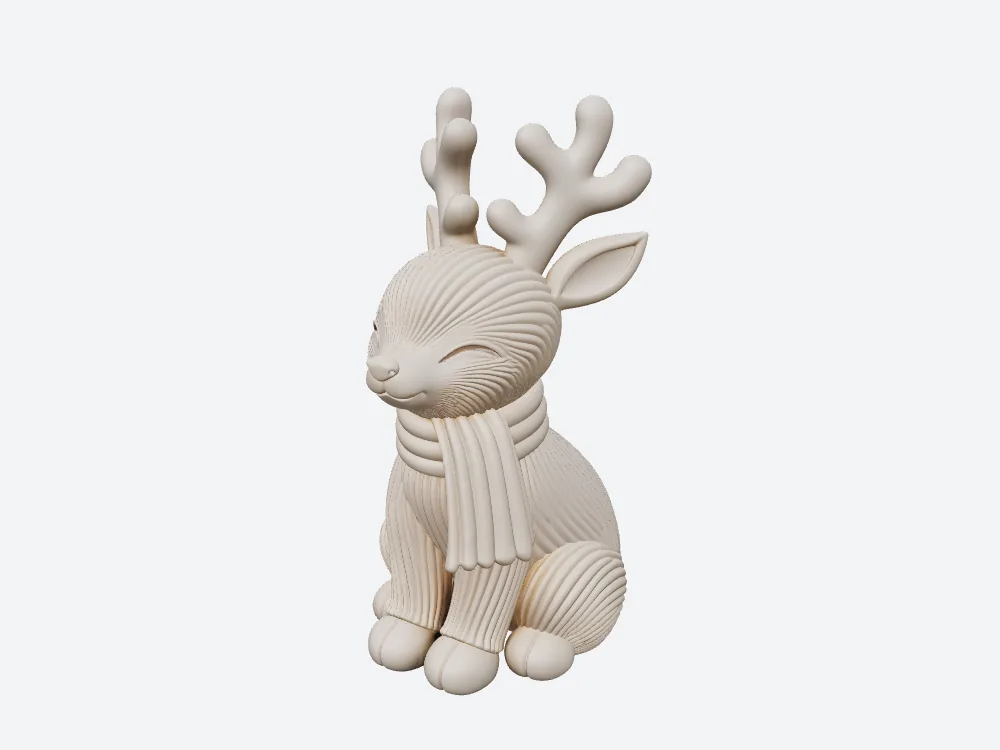 SupaVoxel's reindeer, textured, in the hero camera. Antlers as round beams, ears as thick leaves, three raised scarf coils with the tail hanging clear, corduroy grooves over the whole body. 10.02 MB.
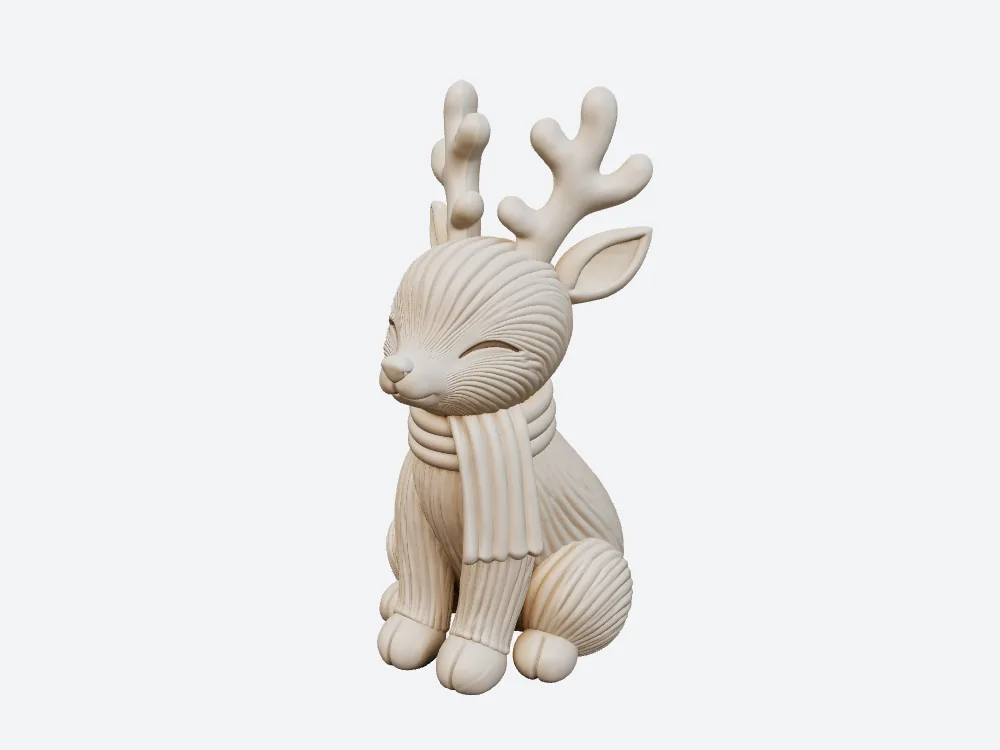 Tripo, same camera. Leaner, sharper, ribbing packed tighter and shallower. It is the better-looking render and I will not pretend otherwise. 64.63 MB — 6.45× the bytes for this difference.
The 64.63 MB breakdown: 5.68 MB nothing in a print pipeline reads
Split the texture payload by what a print job can actually use. Base colour is the only map that matters if you are going to paint or preview — and on a single-colour FDM print, not even that.
Tripo's base colour map is 2.06 MB. SupaVoxel's is 0.79 MB. Then there is everything else: Tripo carries 5.68 MB of normal and metallic-roughness maps, SupaVoxel carries 0.55 MB. That is 10.3×, and it is 5.68 MB that has to cross the network before it is discarded.
- Base colour — Tripo 2,062,520 B · SupaVoxel 785,292 B · 2.6×
- Other maps — Tripo 5,675,120 B · SupaVoxel 549,822 B · 10.3×
- Largest single map — Tripo 4096² normal, 3,440,384 B PNG · SupaVoxel entire texture set 1,335,114 B
- Second largest Tripo map — 4096² metallic-roughness, 2,234,736 B JPEG
Tripo's normal map on its own is a third of the whole SupaVoxel GLB. Note the second irony: Tripo already cut the ribbing into the geometry, so that 3.44 MB normal map is high-frequency detail layered on top of detail that is physically present in the mesh.
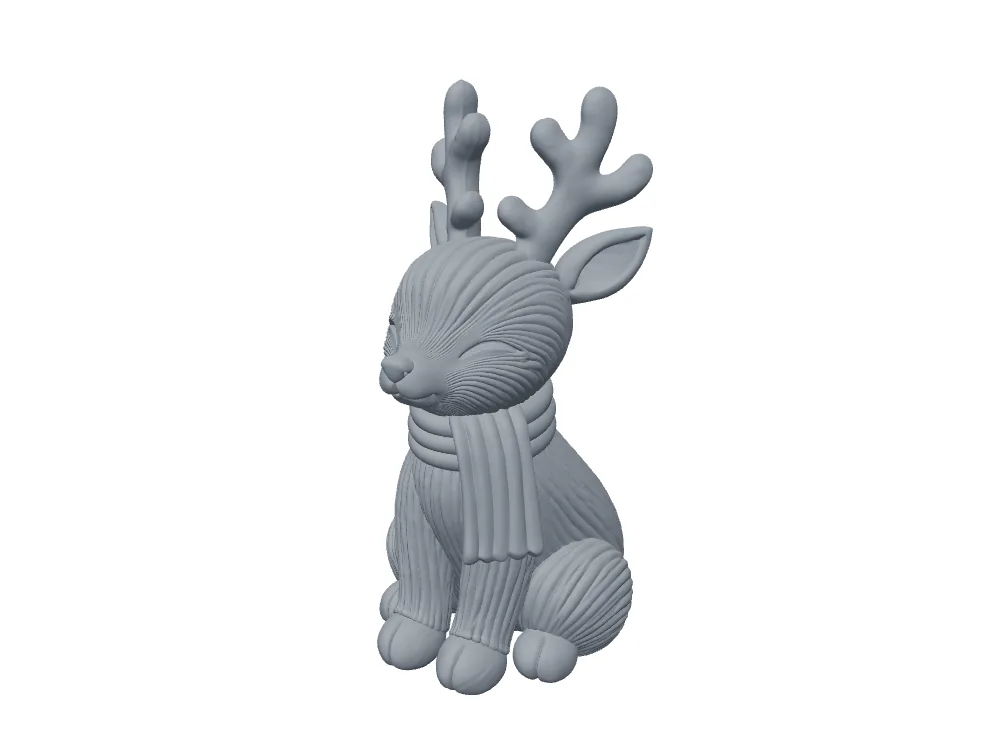 Tripo with every texture switched off. The corduroy grooves are still there, which means they are real displaced geometry rather than a normal-map fake — a genuine pass for Tripo, and also the reason the 3.44 MB PNG normal map is paying for detail the mesh already has.
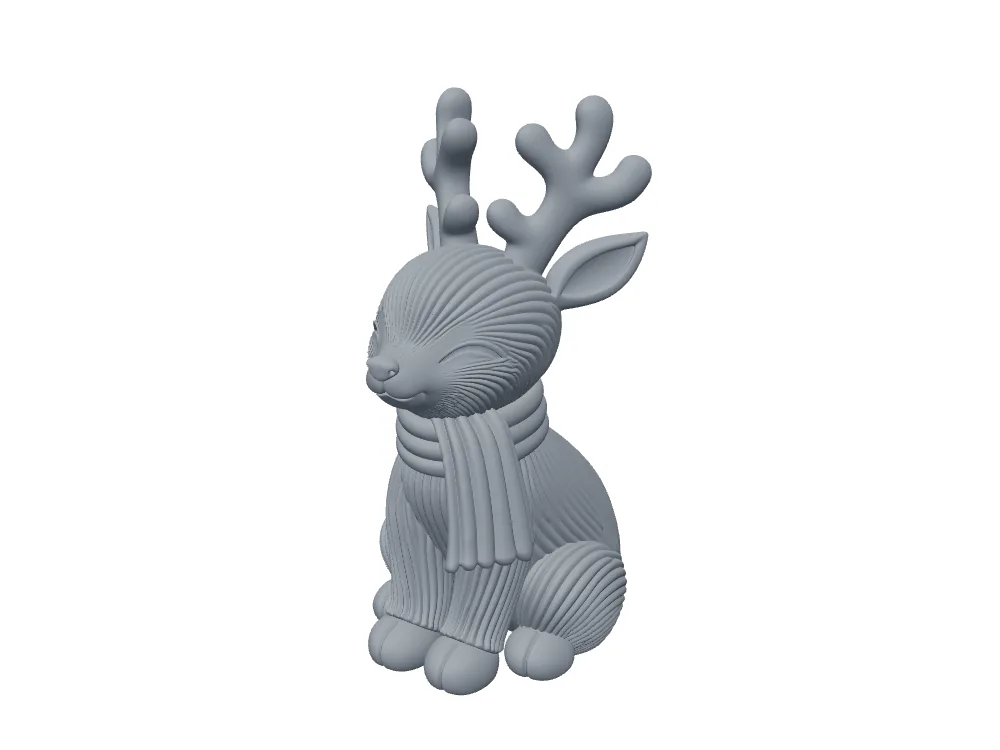 SupaVoxel, same camera, textures off. Grooves present here too, and the whole texture set behind this model is 1.34 MB of WebP against Tripo's 7.74 MB of JPEG and PNG.
Three 4096² maps each, and the format decides everything
Both products ship three 4096 × 4096 texture maps. Same count, same resolution, same job. Tripo encodes them as JPEG and PNG for 7.74 MB total. SupaVoxel encodes them as WebP for 1.34 MB. That is 5.8× from a container choice, before anyone argues about quality.
- Texture maps — Tripo 3 at 4096² · SupaVoxel 3 at 4096²
- Encoding — Tripo JPEG + PNG · SupaVoxel WebP
- Total texture bytes — Tripo 7,737,640 · SupaVoxel 1,335,114 · 5.8×
- Normal map encoding — Tripo PNG (lossless, 3.44 MB) · SupaVoxel WebP
The mesh half of the gap has the same shape. The SupaVoxel GLB ships with mesh compression and vertex quantization; Tripo's does not. One honest cost of that: older toolchains cannot open a compressed GLB directly, and parsing this one for the article needed a conversion step first. If your pipeline is a decade old, that is a real friction and I am not hiding it.
Bytes per triangle: 32.37 against 6.68
Normalise the whole thing per unit of geometry and the picture is unambiguous. Tripo spends 32.37 bytes per triangle. SupaVoxel spends 6.68. For each triangle of reindeer, Tripo uses 4.8× the storage.
- Bytes per triangle — Tripo 32.37 B · SupaVoxel 6.68 B · 4.8×
- Extra Tripo triangles — 497,393
- Extra Tripo bytes — 54,606,400
497,393 more triangles came with 54.6 MB more file. Whatever those extra bytes are carrying, it is not triangles.
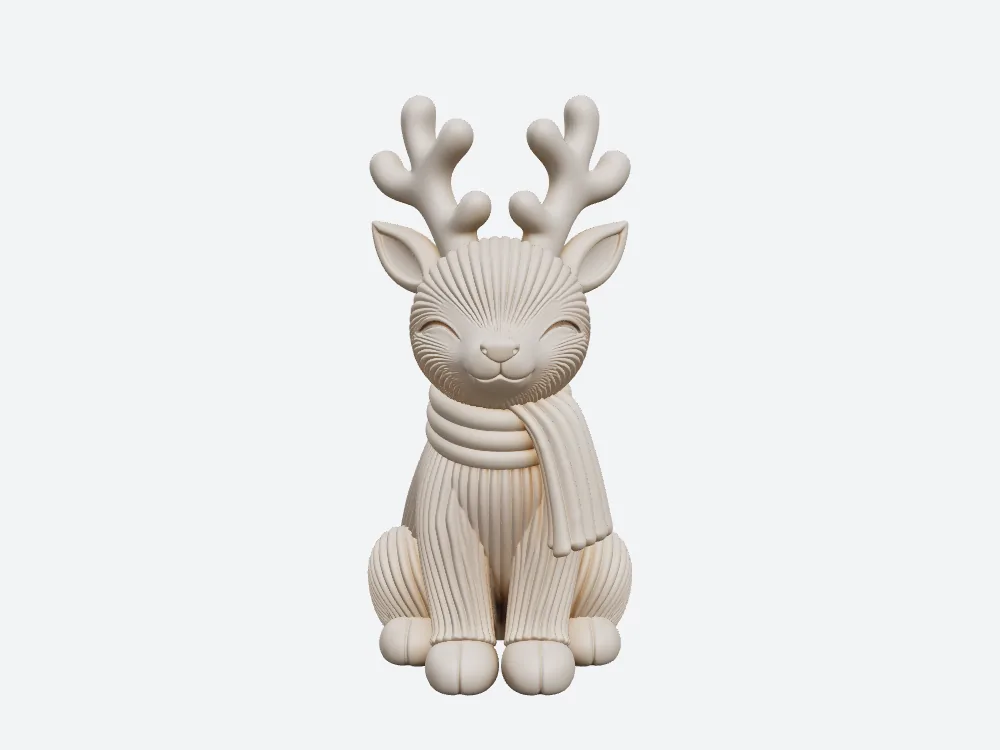 SupaVoxel, front. Antlers show four tines left and five right, each a separate raised prong with air between them. Three scarf coils separate cleanly and the tail splits into strands. The corduroy reads as grooves with depth rather than surface markings.
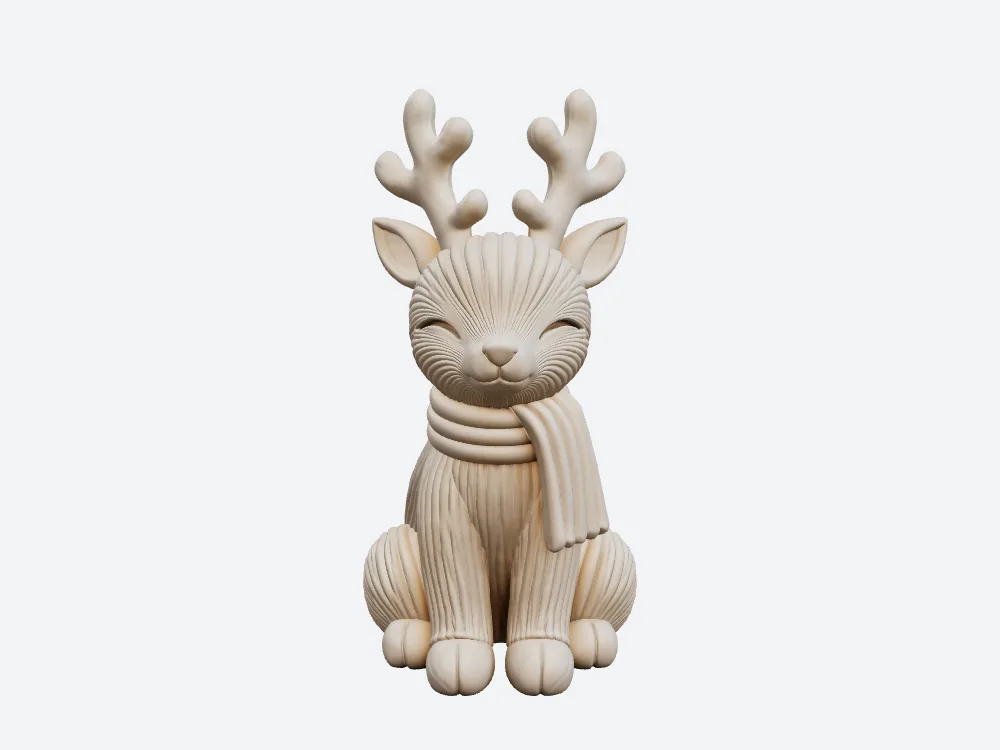 Tripo, same camera. Four and five tines, all separate — Tripo passed the same test. The differences are thinner tines with tighter roots, ears reduced to flat shells, and body ribbing that is denser and shallower. Sharper on screen; that is what the 55 credits and the 64.63 MB bought.
Download seconds on the connection people actually have
Bytes become seconds the moment a real person waits for them. At 12 Mbps — an ordinary mobile connection — Tripo's file takes 43.1 seconds. SupaVoxel's takes 6.7. On 100 Mbps home broadband it is 5.17 seconds against 0.80.
Forty-three seconds of blank screen is not a download, it is an abandonment. And this is one object.
- 12 Mbps mobile — Tripo 43.1 s · SupaVoxel 6.7 s · 6.45×
- 100 Mbps broadband — Tripo 5.17 s · SupaVoxel 0.80 s
- Batch of 100 files — Tripo 6.46 GB · SupaVoxel 1.00 GB · 5.46 GB more
The CDN bill for an online preview
Put the model on a product page and the bytes turn into an invoice. At $0.085/GB and 10,000 loads a month, Tripo's file costs $54.93 and SupaVoxel's costs $8.52 — $46.41 a month, $557 a year, for the same reindeer on the same page.
- CDN per 10,000 loads — Tripo $54.93 · SupaVoxel $8.52 · 6.45×
- Monthly difference — $46.41
- Annual difference — about $557
Every number in this section is division: file bytes times loads times unit price. Change the traffic or the rate and the ratio holds, because the ratio is just 6.45.
Geometry VRAM: the closest row on the card
This is the one weight row where Tripo is nearly competitive. Counting vertices at 32 bytes and indices at 4, Tripo's geometry occupies about 56.9 MB of video memory and SupaVoxel's about 46.4 MB — 1.23×, a 10.5 MB difference. Textures are excluded, which flatters Tripo enormously given the 7.74 MB of maps it also has to upload.
- Geometry VRAM — Tripo 56.9 MB · SupaVoxel 46.4 MB · 1.23×
- Difference on a mobile GPU — 10.5 MB
On a phone, 10.5 MB matters less than 43 seconds of download. But it is the row where Tripo's 1.33× triangle lead shows up honestly, so it is on the card.
The back of the head: both invented it, one held its detail
The input photo is a front view. Everything behind the ears is a guess by both products, which makes it the most interesting comparison in the set — not "who matched the reference" but "who invented something coherent."
Both did well. Both wrapped the scarf around the back with three distinct coils. Both ran ribbing from the crown down to the collar. Both added a tail bobble with a seam. The large structures are strikingly similar and that similarity is the finding.
The difference is at detail scale. On Tripo's crown, an area to the upper left smooths into a flat panel where the ribs dissolve; on the right of that area the ribs survive but read as scratches rather than ridges. On SupaVoxel's they stay as separate rounded ridges from crown to collar across the whole area.
- Scarf wrapped around the back — Tripo yes · SupaVoxel yes
- Ribbing on the invented crown — Tripo partial, smears upper left · SupaVoxel intact
- Tail bobble invented — Tripo yes · SupaVoxel yes
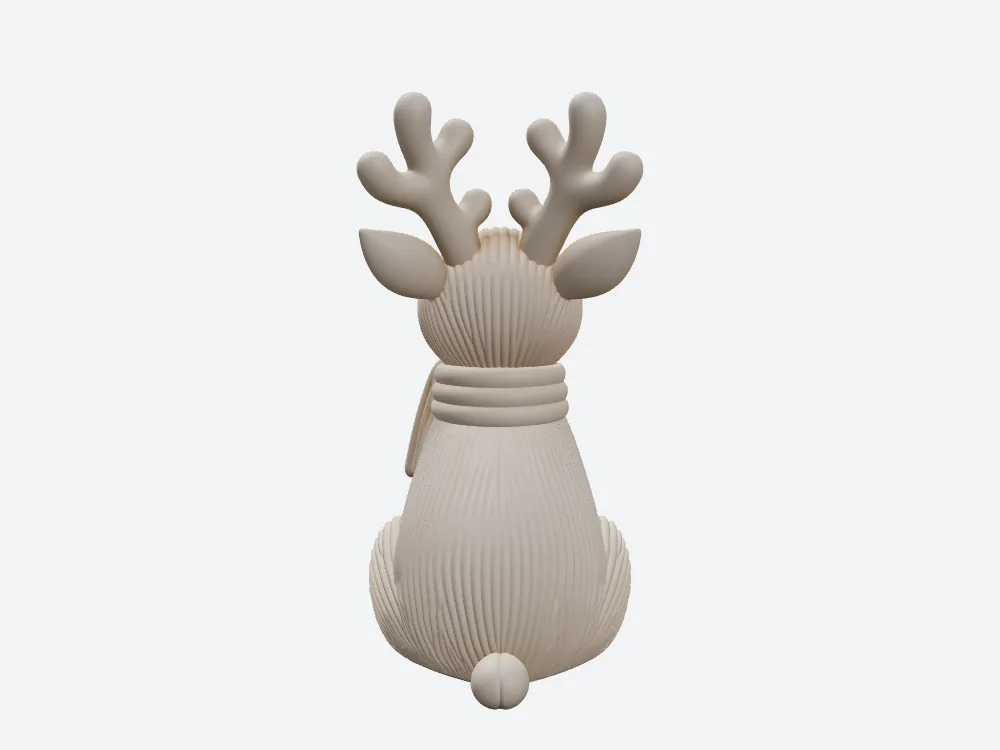 SupaVoxel from behind. Ribbing radiates from the crown and runs unbroken into the three scarf coils, then continues down the back in vertical ridges to a seamed tail bobble. None of this is in the input photo.
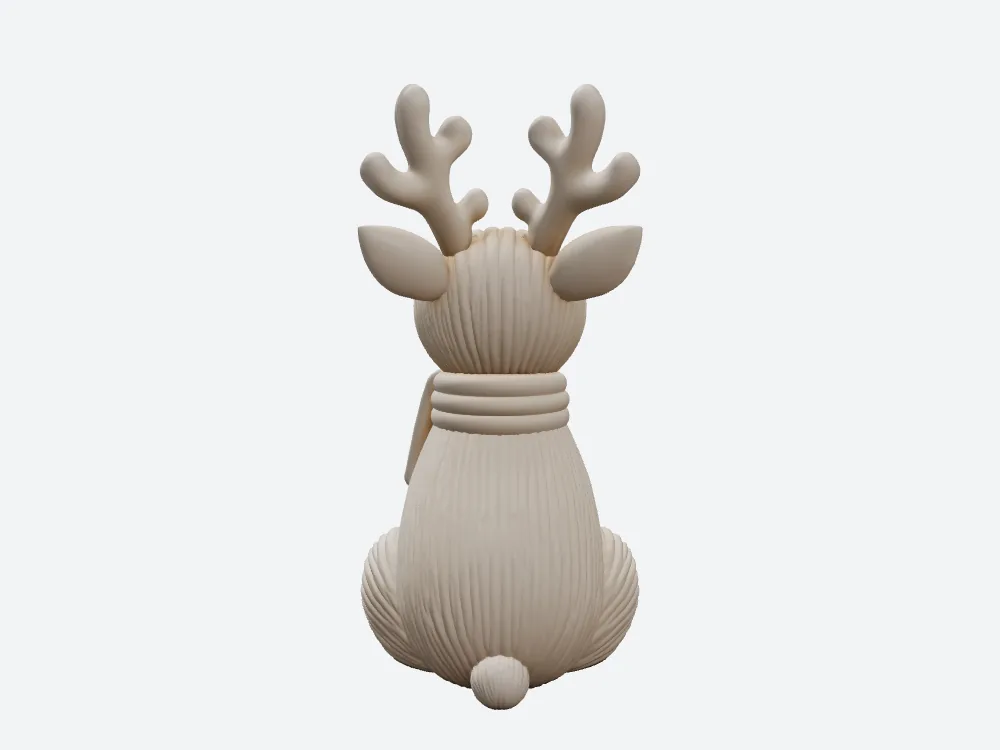 Tripo, same camera. Also invented, and the large structure agrees closely — scarf, ribbing, tail bobble. Tripo deserves credit for not flattening the unseen side into a bald panel, which is the usual failure here.
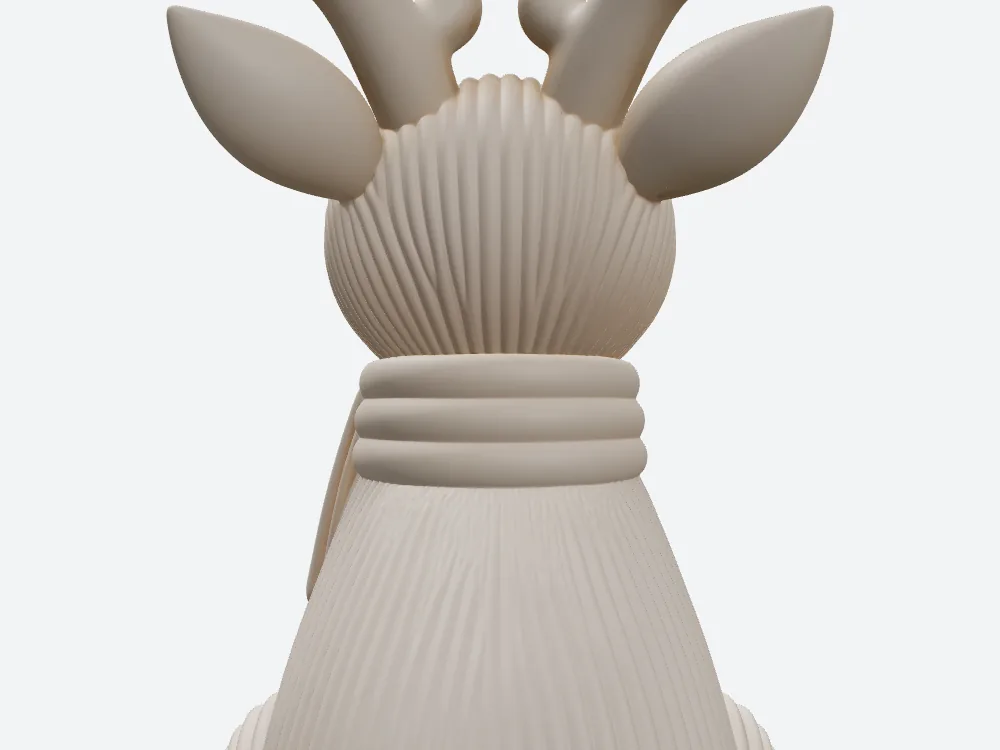 SupaVoxel, back of head close up. Each rib is a separate rounded ridge with depth, running crown to collar without a break, and the valleys between the three scarf coils stay open.
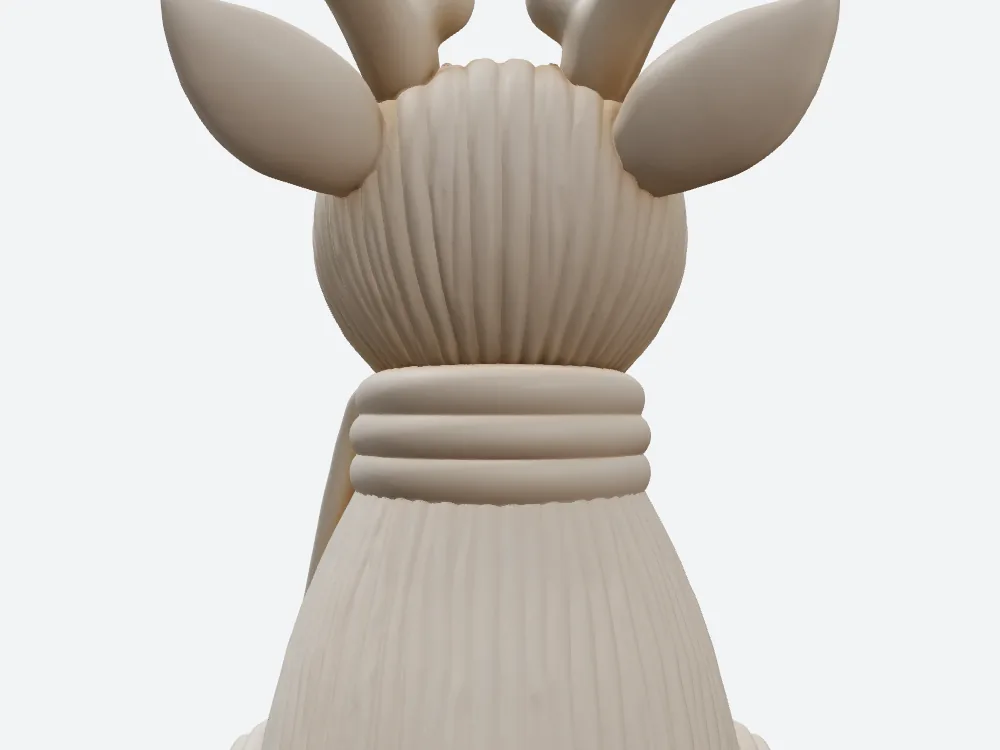 Tripo, same close up. The scarf coils are rounder and softer with shallower valleys, and there is a smeared bulge where the scarf meets the body. On the upper-left crown the ribbing has flattened into a smooth panel.
The pair of images I will not use as evidence
There is a wireframe close-up of each model in the source set and neither is usable. At 1.5 and 2.0 million triangles a wireframe zoom renders as a near-black blob — the higher the count, the blacker it gets, which makes Tripo's worse for reasons that have nothing to do with quality.
So the antler evidence in this series comes from tight crops of the untextured mesh renders instead. I am naming the useless images rather than quietly dropping them, because the honest version of a test includes the measurements that did not work.
Both panels told the truth
Tripo's result screen reported 1,996,779 triangles and 1,028,963 vertices. The downloaded GLB parses to exactly those figures. SupaVoxel's panel reported 1,499,386 and the file parses to 1,499,386.
Neither product inflates its own numbers. Tie, recorded as a tie.
- Panel triangles vs file — Tripo 1,996,779 / 1,996,779 · SupaVoxel 1,499,386 / 1,499,386
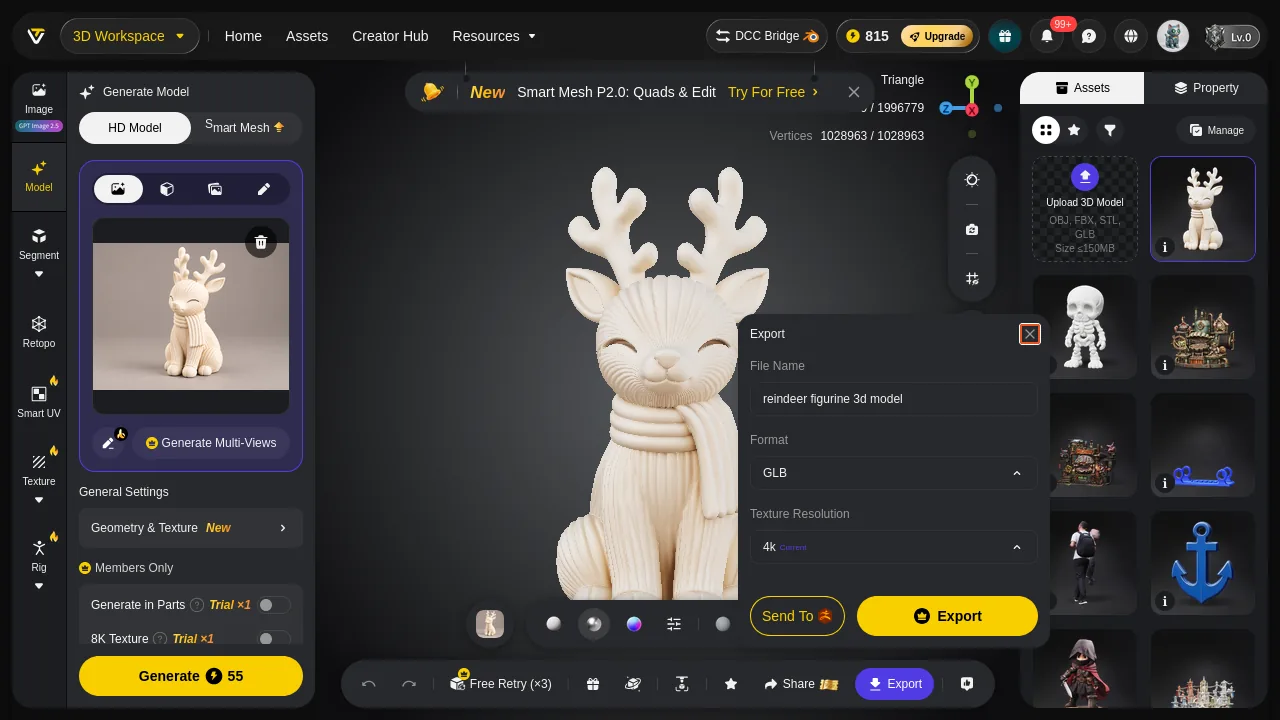 Tripo's export panel, once the tutorial popup covering it is dismissed: File Name auto-filled, Format GLB, Texture Resolution 4k Current. Two steps from here to the 64.63 MB file.
Triangle counts are a house budget, not a fidelity dial
The tempting conclusion is that Tripo simply chose a heavier mesh and SupaVoxel a lighter one. The ten cases I ran say something more specific.
Across nine cases on the same day at the same settings, Tripo's triangle counts ran 1,896,372 to 1,996,779 — a spread of 5.2% of the mean. A chibi reaper, a minimal watch stand and a tank all came back at roughly the same count. That is a fixed budget spent regardless of subject.
SupaVoxel's ran from about 945,000 to 2,786,054 across ten cases, a 146% spread. And it goes both ways: on the tank SupaVoxel shipped 44% more triangles than Tripo did. The claim is not that SupaVoxel is leaner. It is that Tripo's number does not move — and with one run per case, that is a pattern across ten samples, not a specification I can quote.
- Tripo triangle range, 9 cases — 1,896,372 to 1,996,779 · spread 5.2% of mean
- SupaVoxel triangle range, 10 cases — about 945,000 to 2,786,054 · spread 146%
- This case — Tripo 1,996,779 · SupaVoxel 1,499,386
- Tank case — SupaVoxel 2,786,054, 44% more than Tripo
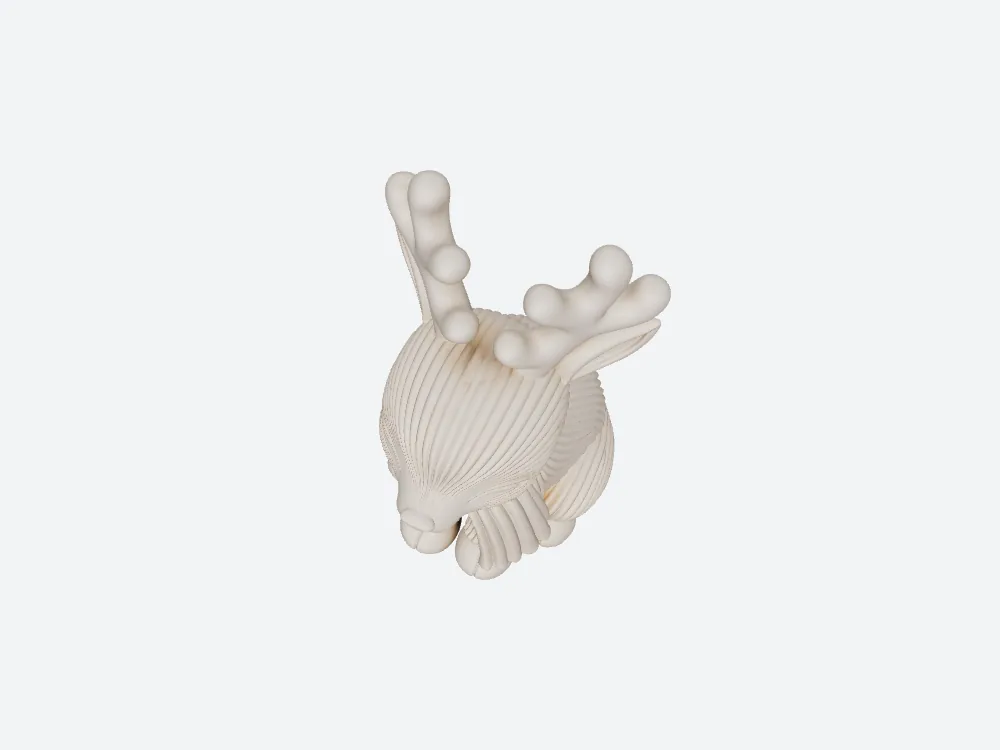 SupaVoxel from above. Antler tines fan out in different directions without touching, crown ribbing converges on a clean central ridge, and both ears read as leaves with obvious width.
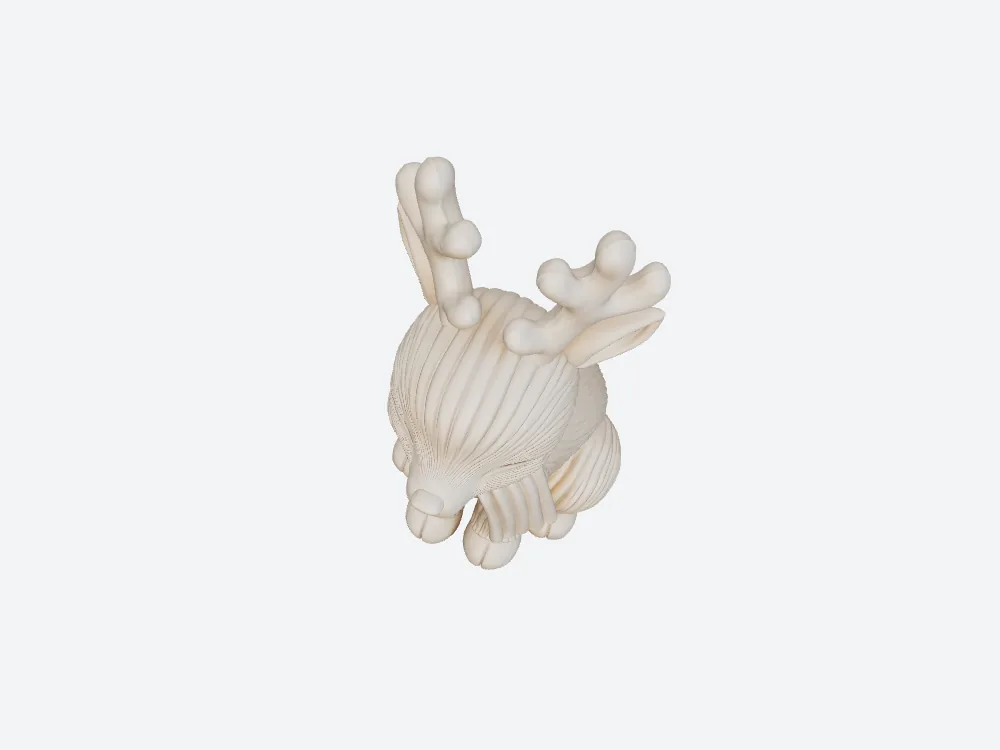 Tripo, same viewpoint. Tines are separate here too. The ears, though, have narrowed to something close to a line, and there is a flattened patch of crown ribbing near the left brow that SupaVoxel's does not have.
Final verdict: Tripo scores 62, SupaVoxel scores 90
Tripo's reindeer is the better render. Sharper antlers, denser ribbing, a convincing invented back, and a result panel that reports its own numbers honestly. On a screen, at a fixed camera, Tripo wins the look.
The bill for the look is 64.63 MB against 10.02 MB, of which 5.68 MB is texture data a print pipeline never reads and 3.44 MB is a single PNG normal map for detail that is already cut into the mesh. It is 43.1 seconds of mobile download against 6.7. It is $54.93 of CDN a month against $8.52. And the 1.33× triangle lead that supposedly justifies it is a fixed house budget Tripo spends on every subject in the batch, not fidelity scaled to this one.
Tripo: 62/100. SupaVoxel: 90/100.
Which one I would use for this job
If the file has to travel — to a customer, a product page, a phone, or a hundred of them — use SupaVoxel. 10.02 MB instead of 64.63, 6.68 bytes per triangle instead of 32.37, three 4096² maps in WebP instead of JPEG and PNG, 6.7 seconds of mobile download instead of 43.1, and $8.52 of CDN a month instead of $54.93.
Three honest marks against SupaVoxel: its GLB's mesh compression means older toolchains need a conversion step before they can open it. Its export carries no real-world units, so you scale it yourself. And its project grid is not reliably newest-first under concurrent use — I opened the wrong project by card position during this very run.
Originally published on Medium: Tripo AI 3D Generator Review 2026: 64.63 MB for 1.33x the Triangles.