If you're using image to stl tools to make a 3D-printable model, this review shows why a convincing render and a sealed mesh are not enough to approve a print. Its skeleton-cat comparison examines ribs, mesh defects, and export options; neither model was physically printed.
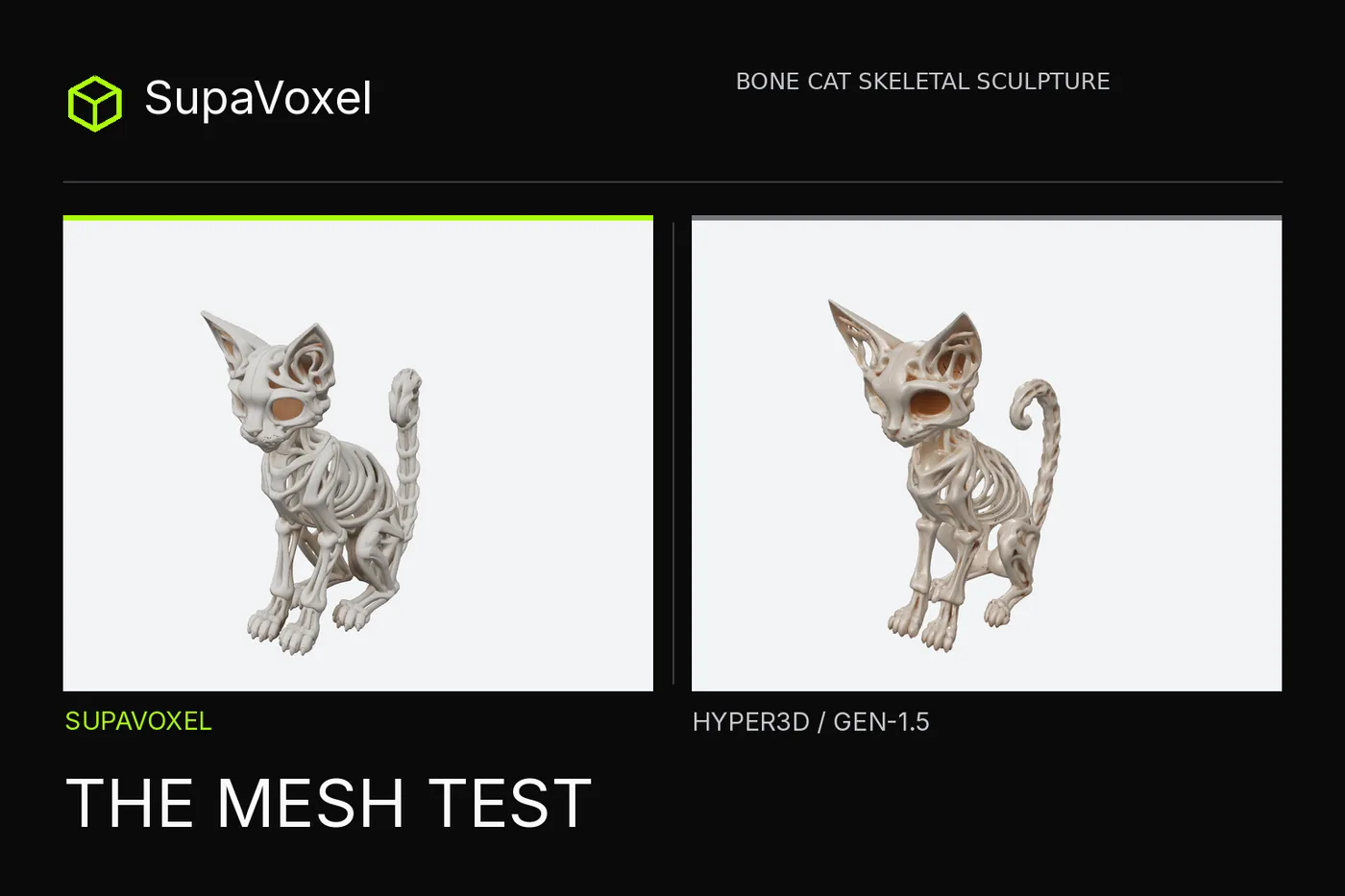
Disclosure: I ran this comparison independently on standard customer accounts. Neither vendor granted special access, and neither saw the text ahead of release.
Picture a palm-sized skeleton cat: open ribs, a tail that loops back on itself so light passes through, the kind of oddity people buy for a bookshelf. Now picture the buyer picking up the 120 mm print by a single rib. That second image is what this review is really about, because a render can look convincingly hollow while hiding a strut far too slender to handle.
Both Hyper3D and SupaVoxel got the identical cat illustration. I downloaded one textured file from each and analysed the real surfaces rather than the viewport. Hyper3D's free Gen-2.5 preview was not downloadable, so the Hyper3D file in this piece is its Gen-1.5 PBR export. Neither cat was sliced or physically printed.
My verdict in 60 seconds — once the UV seams are welded, both cats clear the same narrow watertightness check, and neither has earned a print approval. Hyper3D keeps the ribs looking more delicate, and its local triangles are tidier. SupaVoxel samples the surface more finely, computes to a smaller solid-fill volume and shows 3MF in its export menu — yet its 7,217 sliver and 19 degenerate triangles are real cleanup work. I'd reach for SupaVoxel when the sculpt is going to be refined further or when a 3MF pipeline is worth exploring, but I would not call it the sturdier or easier-printing rib cage. The eight paired calls below are my editorial judgments for this single figure, not measured scores.
- Sealed outer surface — Hyper3D: watertight with 0 nonmanifold edges · SupaVoxel: watertight with 0 nonmanifold edges once welded. A draw on this narrow check.
- Single connected piece — Hyper3D: 1 face-connected component · SupaVoxel: 1. Neither figure says anything about how strong a rib is.
- See-through ribs — Hyper3D: more slender, separate bars · SupaVoxel: wider arches that run together. For a delicate look, Hyper3D takes it.
- Holes in the tail — Hyper3D: smaller through-holes · SupaVoxel: a heavier open loop. Each genuinely keeps its openings.
- Average triangle edge, longest side scaled to 120 mm — Hyper3D: 0.7664 mm · SupaVoxel: 0.3139 mm. Finer sampling for SupaVoxel; rib thickness itself was not measured.
- Triangle hygiene up close — Hyper3D: 0 degenerate, 249 sliver · SupaVoxel: 19 degenerate, 7,217 sliver. This is where SupaVoxel genuinely loses.
- Downward-facing area — Hyper3D: 3,020.2 mm² · SupaVoxel: 4,322.7 mm² in the stated orientation. Less absolute area for Hyper3D; not a slicer support figure.
- Solid-fill resin estimate — Hyper3D: 46.53 cm³ / $1.63 · SupaVoxel: 38.95 cm³ / $1.36 at $35/L. A $0.27 saving for SupaVoxel on paper, not an actual print invoice.
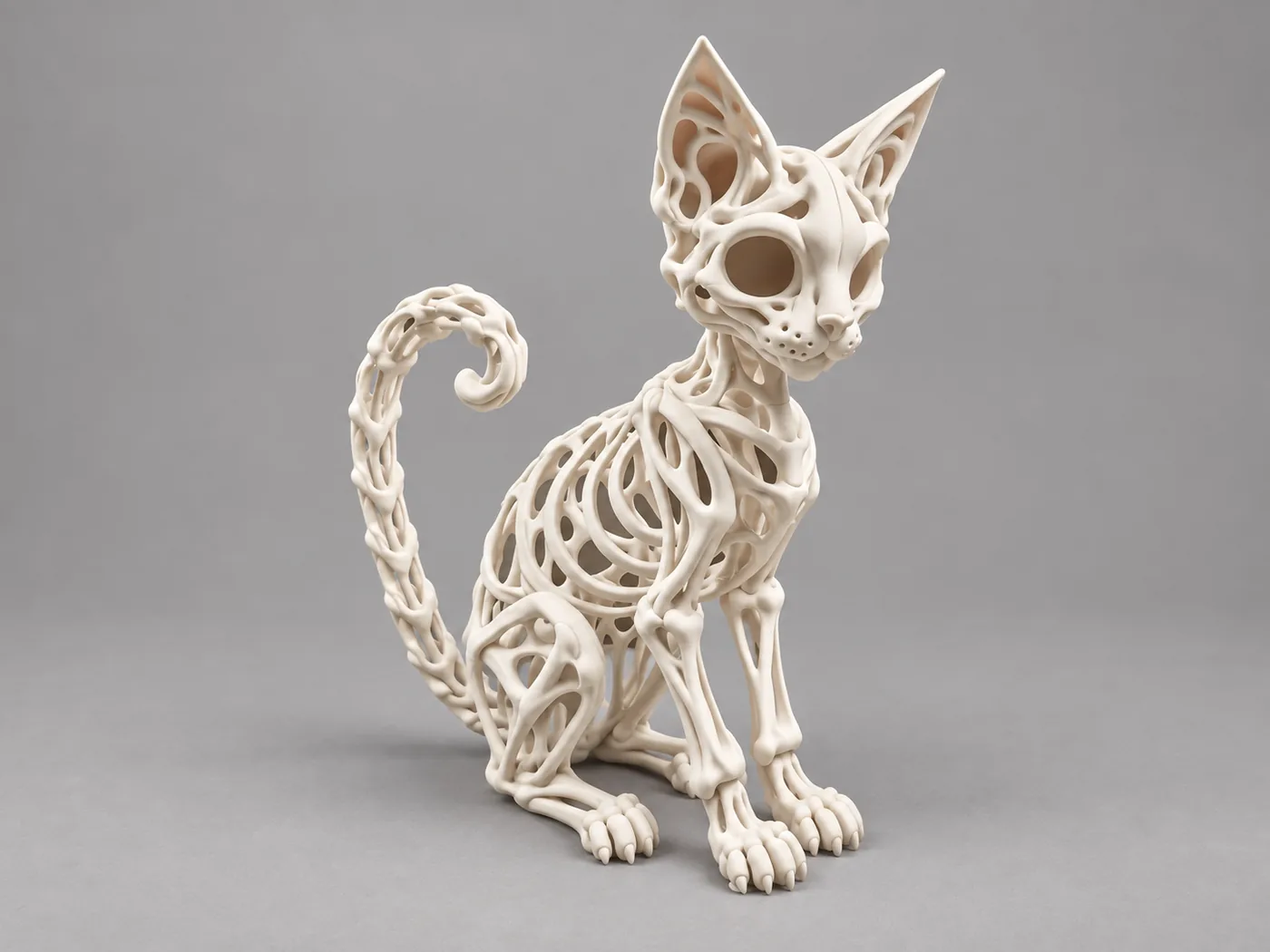
Both tools received this same 1,702,829-byte illustration, generated independently. The gaps between ribs are visible, but no wall thickness can be read off a flat picture.
What job does a bone cat actually have to do?
It isn't competing on how pretty it looks in a browser viewport. The brief asks for an open rib cage, a pierced tail and separate limbs that still read as a skeleton when shrunk to a small object. I had one image taken from one side, nothing describing the hidden back, and no target rib diameter. A buyer will tolerate artistic license; nobody should tolerate a "print-ready" promise on tiny struts that nobody has tested.
Hyper3D produced a Gen-2.5 preview plus a separate Gen-1.5 model that could be downloaded; SupaVoxel produced one model from the same source PNG. Rather than trust a thumbnail that looked alike, I confirmed the SupaVoxel request's input by hash. Hyper3D's two versions stored different automatic descriptions, so I won't pretend the visual gap between them comes down to the version alone. The million-triangle figure on the Gen-2.5 panel plays no part in any GLB measurement below.
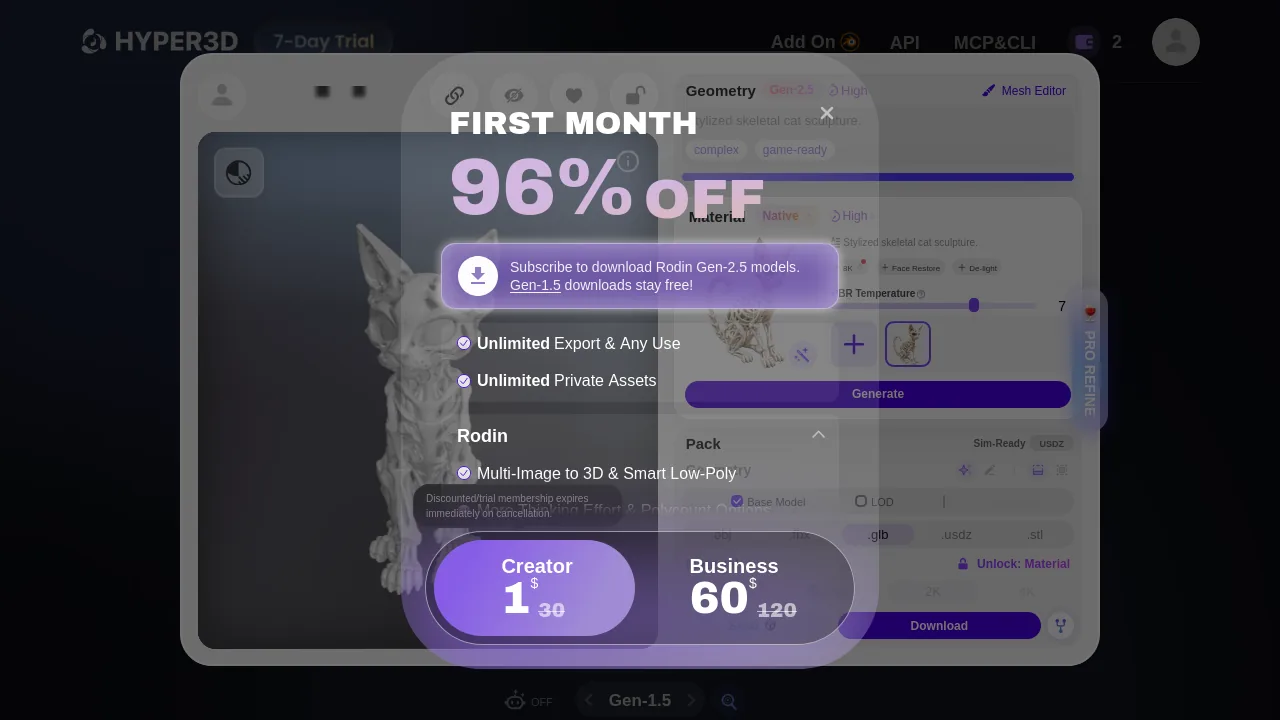
On the free account, Download for Gen-2.5 was refused after a separate 0.5-credit trial. That preview is not the Hyper3D mesh being compared.
Front view: which chest reads as individual bones?
Both do, to a degree. Hyper3D's chest has more bars, each looking narrower; SupaVoxel's has wider arches that cross each other. Eye sockets, ears, legs and a central opening survive in both. Judged purely as "a delicate skeleton cat on a display card," this input goes to Hyper3D. Piling polygons onto the SupaVoxel side does not turn thick-looking arches into slender bones.
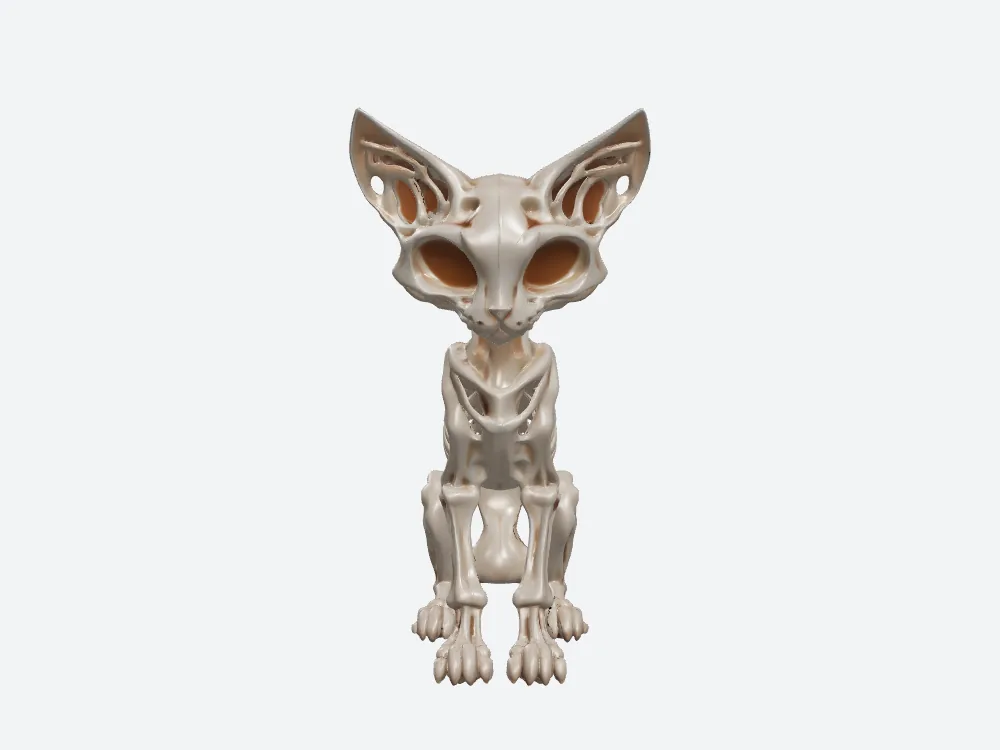
More finely divided ribs on the Hyper3D front — a visible sculptural advantage, not a measured wall thickness.
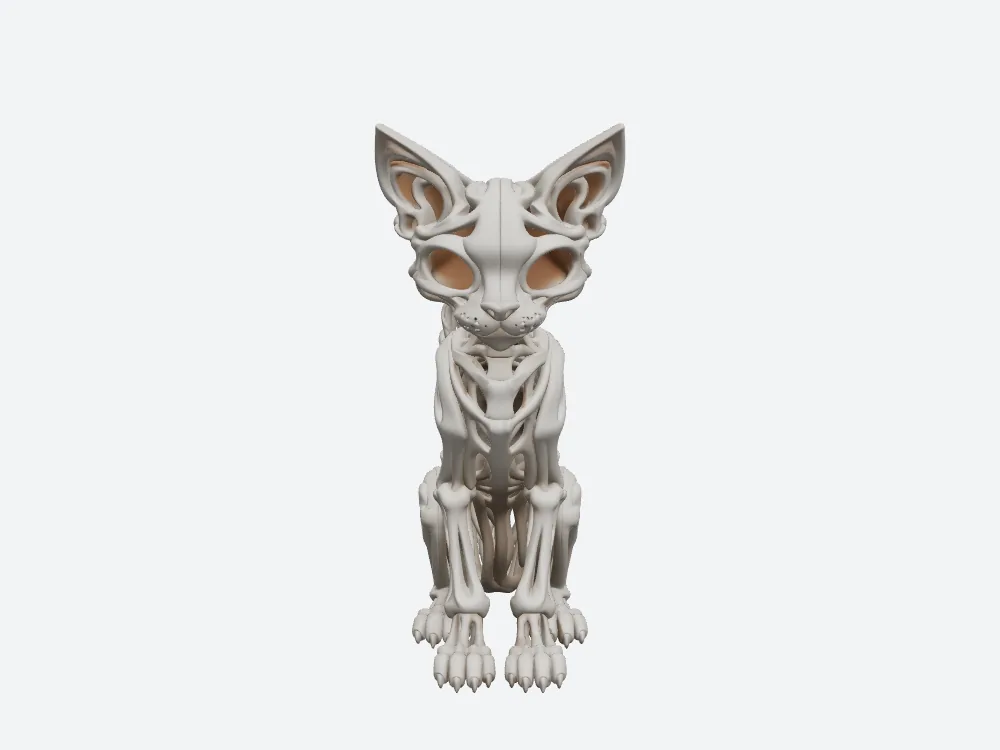
The SupaVoxel chest is open as well, drawn with wider curves. That it is watertight after welding is a separate matter.
Side profile: where the two skeletons part ways
Turned sideways, Hyper3D shows small holes through the curled tail and tightly packed ribs along the chest. SupaVoxel renders a continuous open loop and bigger arches that cross. The broad impression — two skeleton cats — holds up; the finer design choices diverge. Someone spinning a product listing may well pick a favourite aesthetic on sight.
No printer's minimum feature size was checked. With the bounding box capped at 120 mm, the smallest holes could close up during slicing or post-cure cleaning. "At 120 mm" in this article always means each file's longest outside dimension, not matched standing height. Hyper3D scales to 58.34 × 120.00 × 106.42 mm; SupaVoxel to 48.86 × 116.38 × 120.00 mm. Matching both to the same vertical height would be a separate scaling job.
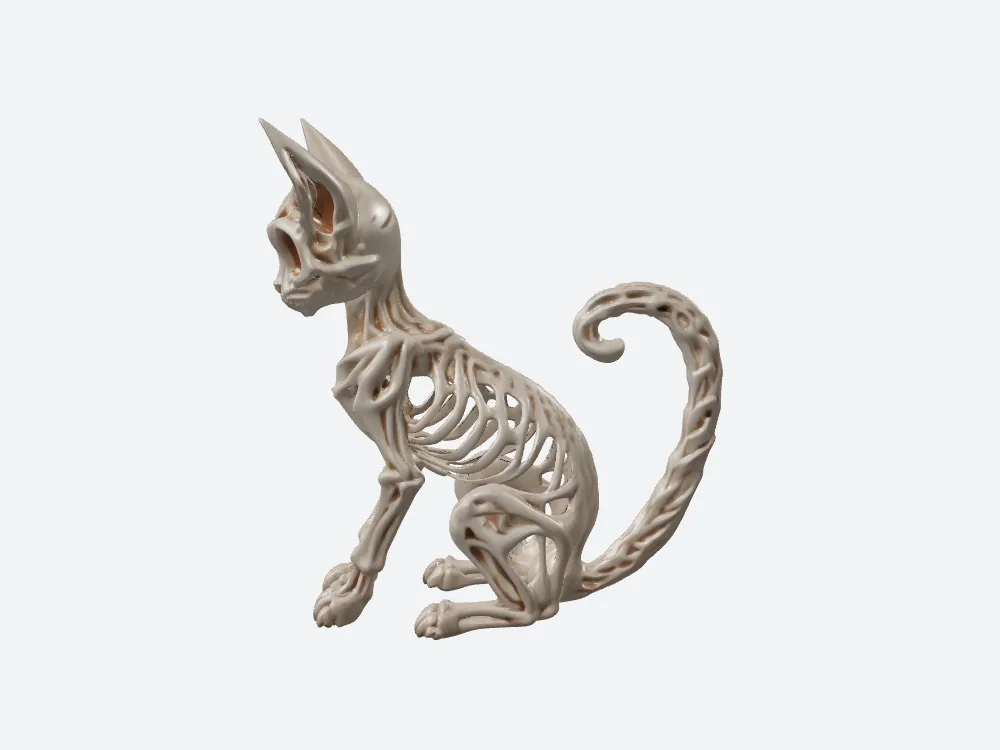
At the same side yaw, Hyper3D shows tighter rib spacing and finer tail holes. The render comes with no fracture test.
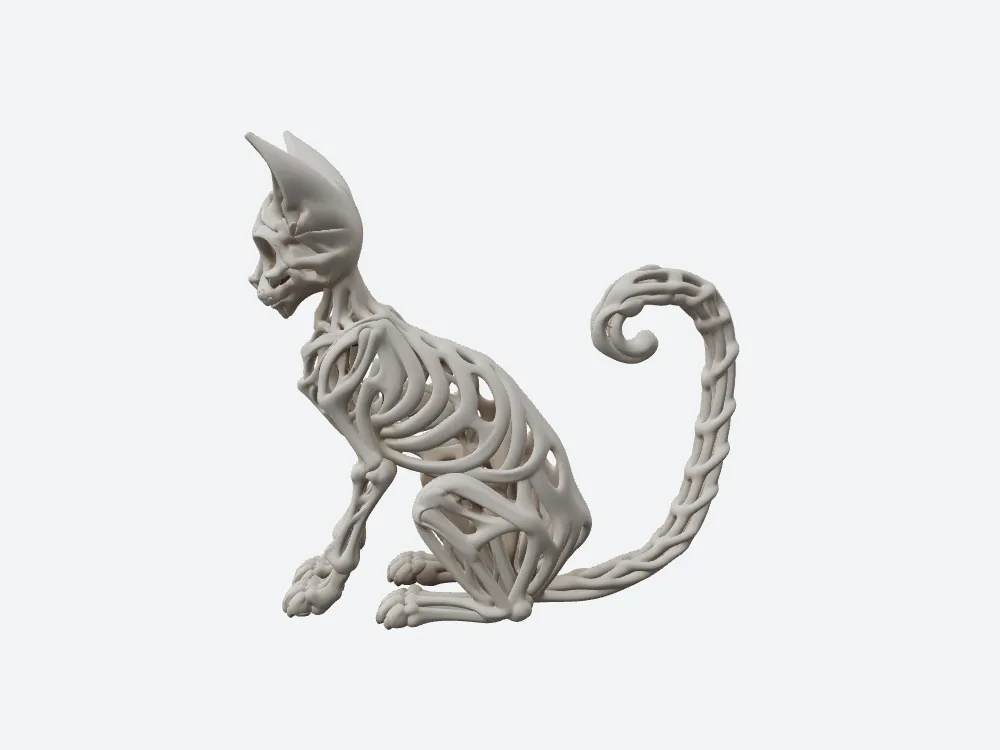
Real gaps remain on the SupaVoxel side, but the tail loop is heavier. A denser mesh did not yield a finer skeletal outline.
The back neither tool could see
Hyper3D invents a narrow central spine and keeps the ribs individually visible. SupaVoxel invents a wider, joined rear surface with openings along the flanks. There was no rear photograph for either to work from. If this cat is sold as a rotating collectible, that made-up back needs its own art sign-off before anyone markets it as an "accurate reproduction."
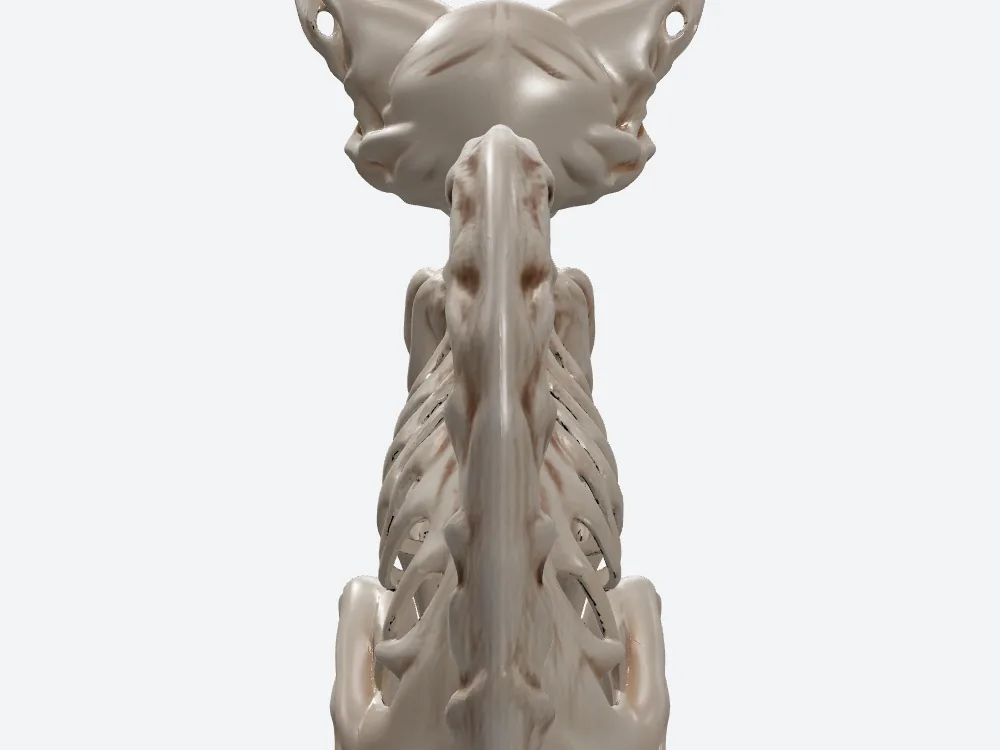
Hyper3D's invented spine looks thinner, so more separate ribs show up close; the input offers no ground truth for this side.
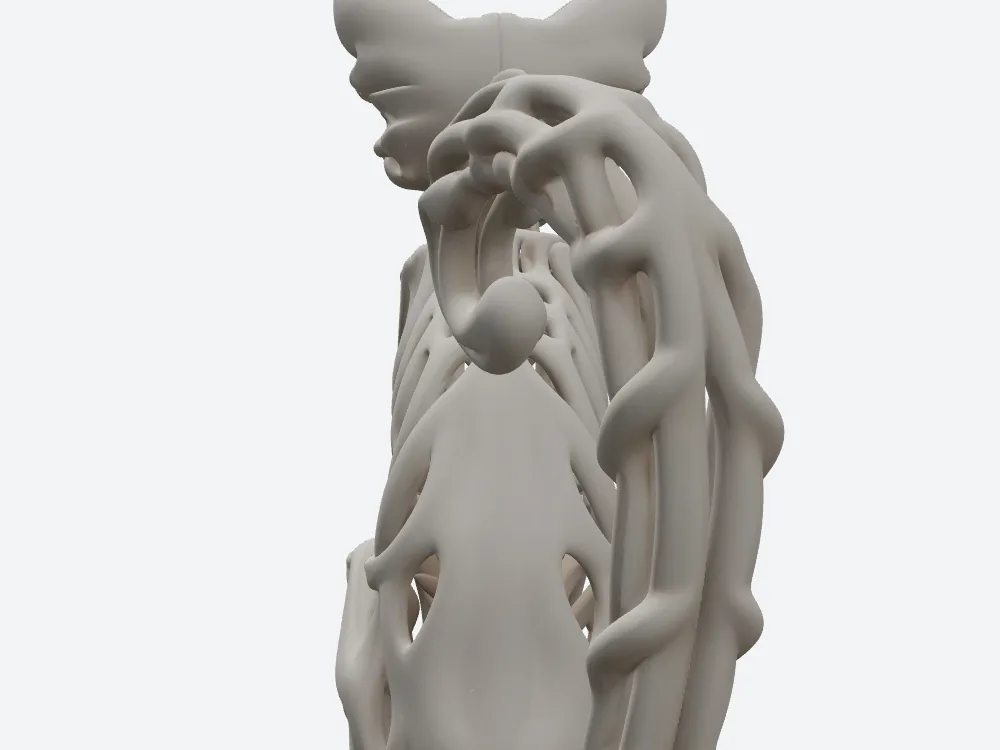
A wider rear spine shifts how the SupaVoxel sculpture reads. It was generated, not reconstructed from a rear view that never existed.
Open holes or open seams? The raw-mesh scare
Textured files set a well-known trap. Wherever the UV map splits, a textured GLB can duplicate vertices that sit at the same point in space. Count boundary edges straight from the original indices, without merging coincident positions, and Hyper3D seems to have 94,024 while SupaVoxel seems to have 277,250. Those figures are seam artefacts, not proof that either sculpture leaks.
Weld by position and each file shows no boundary edges, no nonmanifold edges, consistently wound faces and a single face-connected shell. Hyper3D collapses to 59,890 welded vertices and SupaVoxel to 749,477. So SupaVoxel's huge raw boundary count never meant thousands of holes awaiting repair. A print shop that confuses UV seams with cracks may burn repair hours or bin a perfectly sound shell — while a shop that stops checking at "watertight" can still sail past a rib too narrow to print.
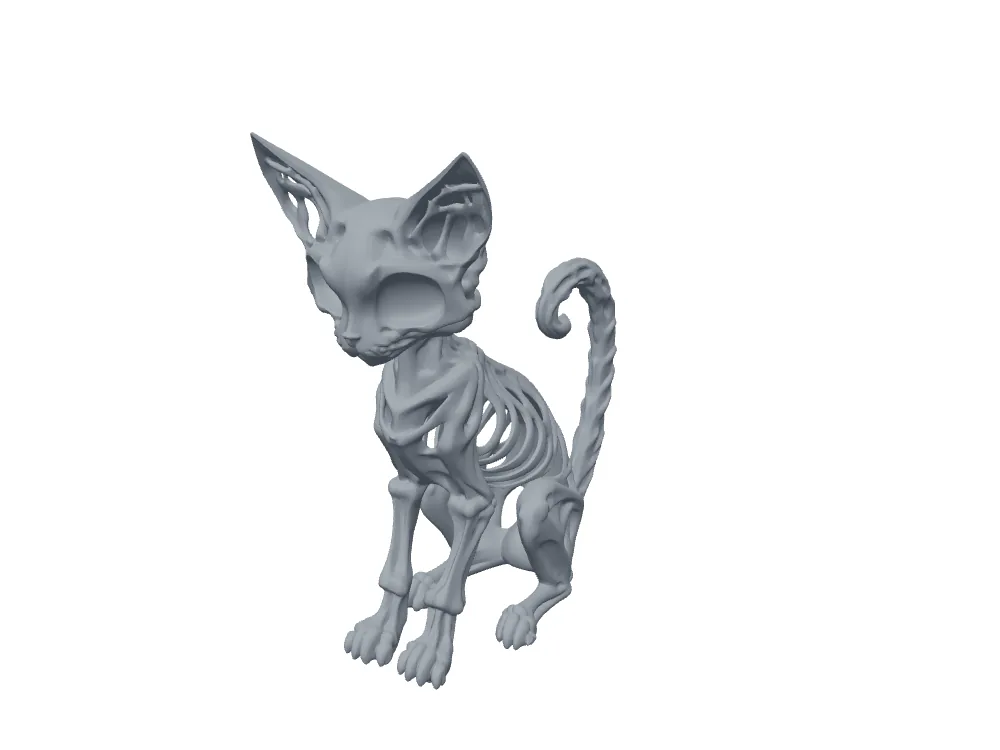
Without textures, the Hyper3D rib openings are still there — deliberate through-spaces, unrelated to the 94,024 raw UV boundary edges.
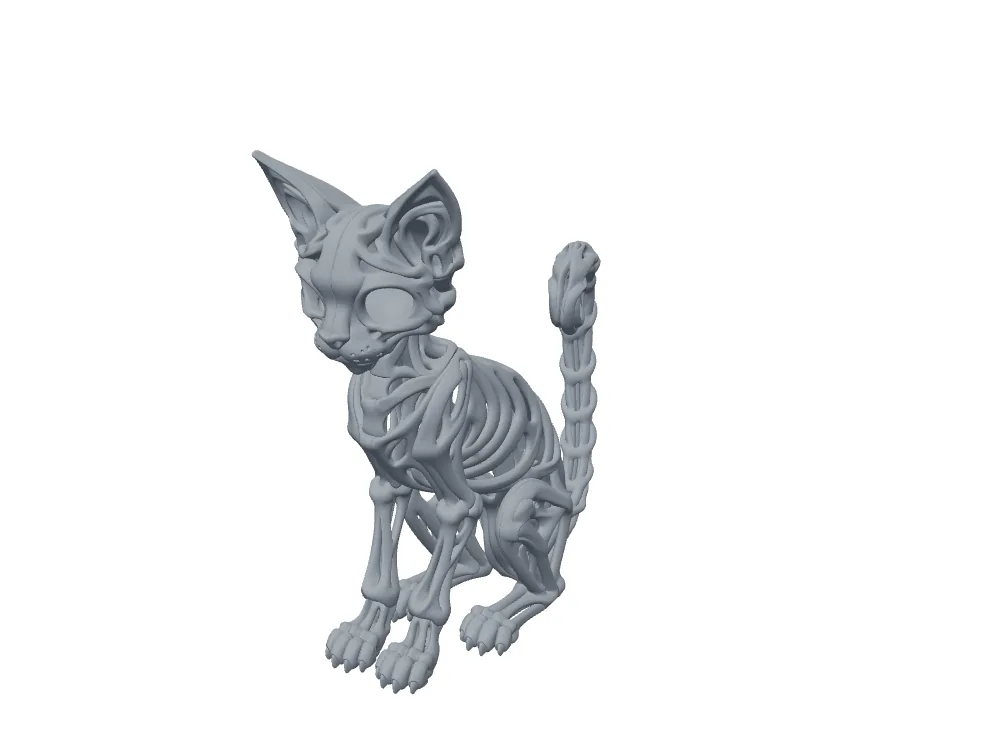
SupaVoxel's gaps are real geometry as well. Once welded, the topology passes, whatever the unwelded index count implies.
What twelve times the triangles buys SupaVoxel
The Gen-1.5 textured file I extracted from Hyper3D holds 120,000 triangles. SupaVoxel's Original size GLB, exported through its UI, holds 1,499,910 triangles. Normalised to the same longest side, mean triangle edges come out at 0.7664 mm and 0.3139 mm. For a sculptor who wants denser sampling to reshape an ear or the tail, that is a measurable plus for SupaVoxel. Triangle count, though, proves neither better fidelity nor any minimum rib size.
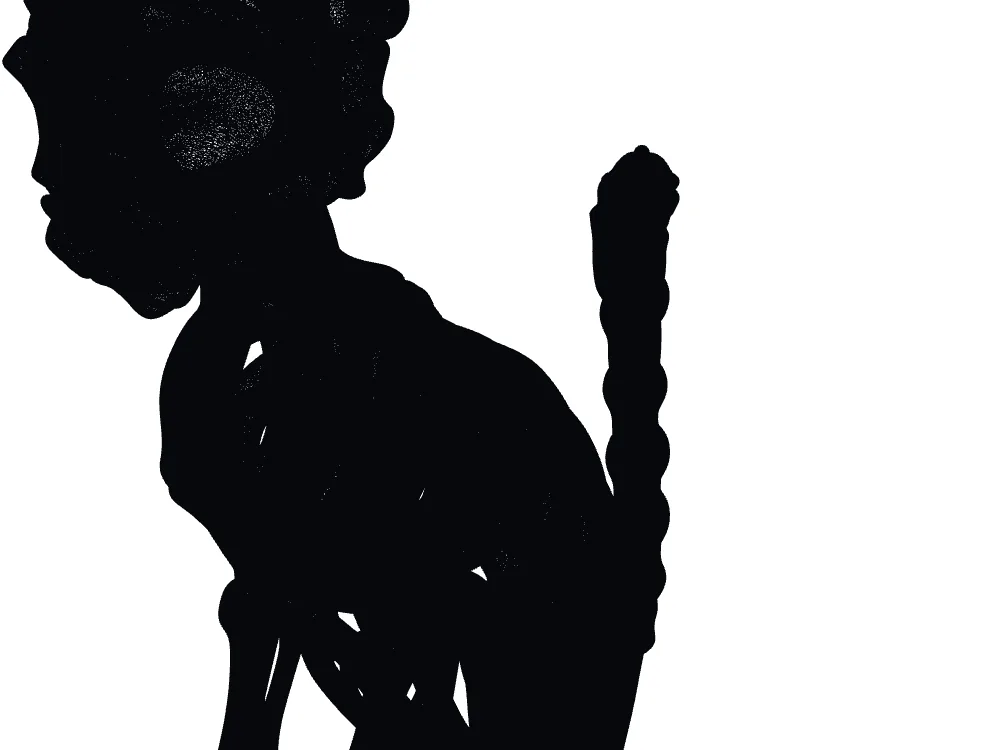
Dense SupaVoxel wireframe: evidence of finer sampling, not of a likeness twelve times better or of struts verified as printable.
The price of density: slivers and degenerates
SupaVoxel loses on local mesh hygiene. By the audit's definitions, Hyper3D has zero degenerate and 249 sliver faces, while SupaVoxel has 19 degenerate and 7,217 sliver faces — 6,968 more slivers. Two watertight surfaces do not make two equally clean ones, and I won't pretend otherwise. Skinny or collapsed triangles can bite when you decimate, edit or slice near a narrow rib. I saw no slicer failure traceable to any particular face.
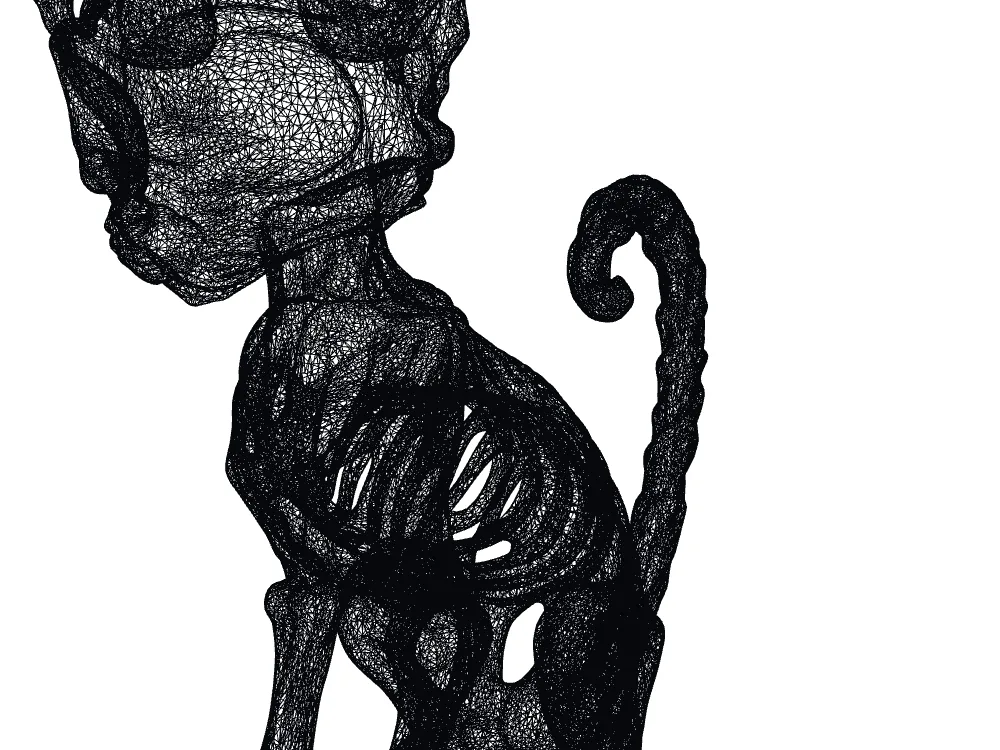
Hyper3D isn't mathematically flawless — 249 slivers are left — but it has none of the 19 degenerates in the rival export.
Downward area is not a support estimate
Count the faces whose normals point within 45° of downward −Y and, at normalized size, Hyper3D scores 11.92% / 3,020.2 mm² against SupaVoxel's 10.55% / 4,322.7 mm². By percentage SupaVoxel is ahead, yet it carries 1,302.5 mm² more absolute downward-facing surface. The ratio and the absolute area diverge because the two meshes cover different total extents.
None of this equals support resin. Reorient the cat, swap build plates, alter slicer rules or hollow it, and the support plan shifts. Scaling the measured area to 100 hypothetical identical cats gives 302,020 versus 432,270 mm² of potential downward surface — not measured support volume, and not labor. Before pricing cleanup for either model, I'd run both through one slicer.
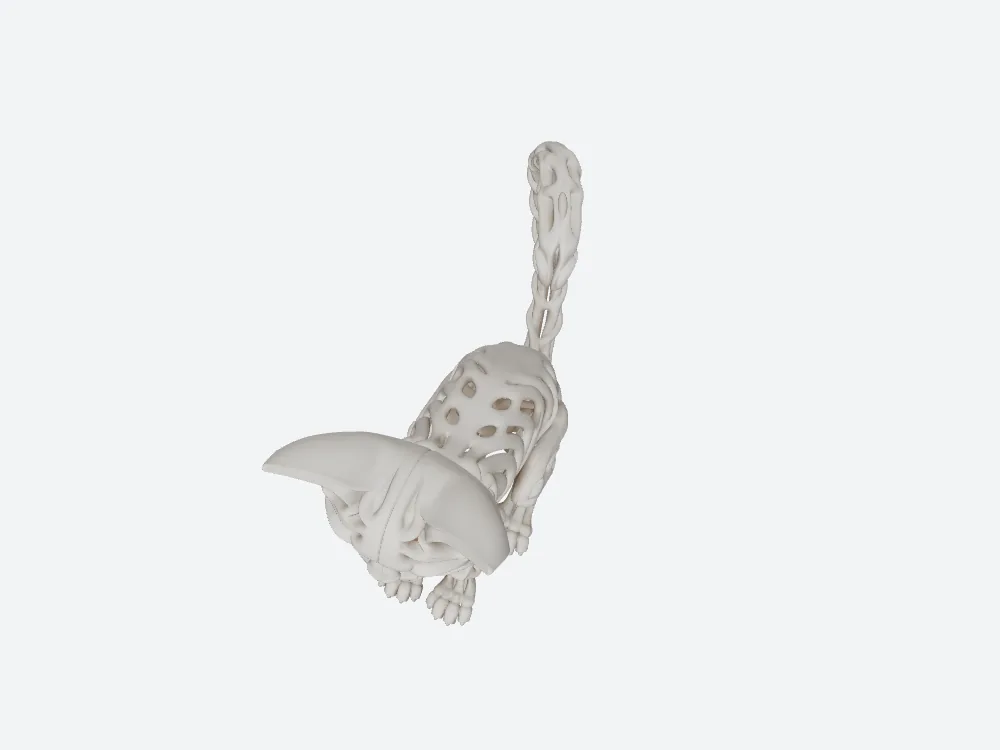
A top view helps choose an orientation, but a screenshot cannot convert 4,322.7 mm² of potential downward surface into real support material.
The resin arithmetic that favors SupaVoxel
Since both welded meshes pass the closed-solid checks, each can carry a conditional volume figure. Normalized to a 120 mm longest side, Hyper3D encloses 46.53 cm³ and SupaVoxel 38.95 cm³. With a modeled $35/L and completely solid fill, that works out to $1.63 versus $1.36. SupaVoxel's file encloses 7.58 cm³ less, roughly $0.27 less assumed resin per piece. Across 100 hypothetical identical solid pours it is $163 versus $136 — a $27 gap for planning purposes, not 100 cats off a printer.
Treat that edge as real only in the sense of arithmetic on two valid closed volumes. It doesn't cancel 7,217 slivers, doesn't show the ribs will survive washing, and doesn't give total material cost. Supports, hollowing, failed prints and handling could easily swamp a 27-cent difference. The SupaVoxel export menu also lists 3MF next to GLB and STL; I never downloaded a 3MF file, so that is a workflow worth exploring rather than a format-quality finding.
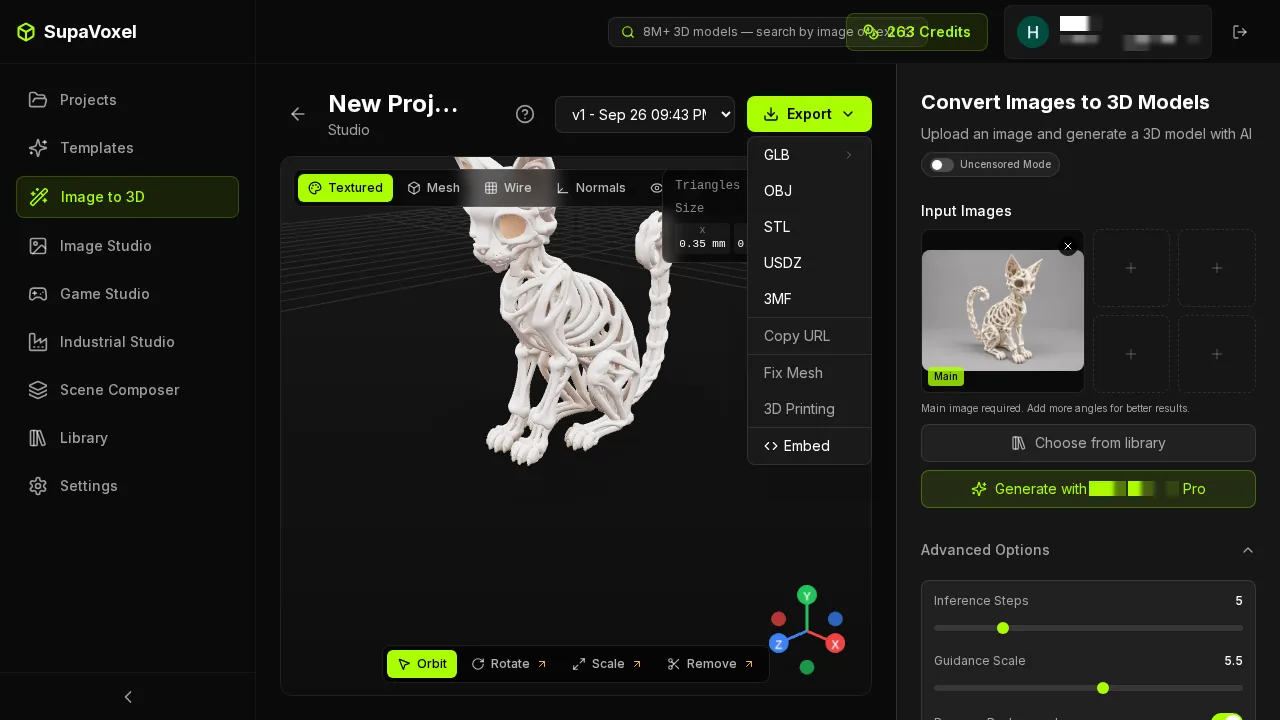
3MF and a mesh-fix entry both appear in the SupaVoxel menu. I tested neither a 3MF export nor any automatic repair.
Showing it to a client
Start with matched front, side and back views instead of one flattering angle. Add a note that both welded GLBs are closed but that no slender rib has been dimensioned. Then run a slicer pass and print a physical sample before promising anyone a durable ornament. Where the commission prizes the most delicate visible ribs and minimal local mesh cleanup, Hyper3D Gen-1.5 gives the better result from this input. Where it prizes a finer surface to sculpt on, the smaller solid-volume estimate or a 3MF route to try, SupaVoxel earns the next test — with its triangle defects written on the work order.
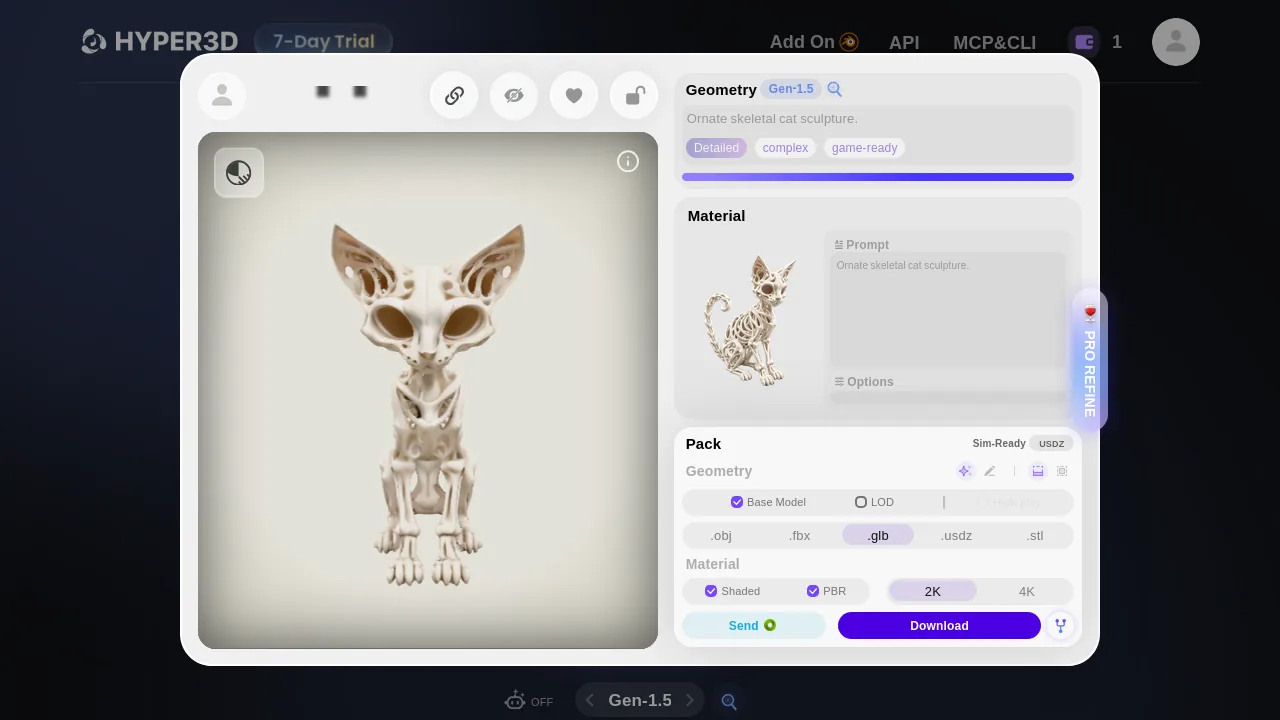
Hyper3D's textured PBR asset arrives in a ZIP holding two GLBs. That packaging and any eventual physical print are separate production calls.
Final verdict: watertight is a gate, not a guarantee
Passing it tells you about topology, not durability. Each cat welds into one closed shell with consistent winding and zero nonmanifold edges. In this run Hyper3D takes the finer-looking exposed ribs, cleaner triangles and smaller absolute downward area. SupaVoxel takes finer average sampling and $0.27 in an openly hypothetical solid-resin sum, while carrying measurable sliver and degenerate defects. For a subject this fragile, I would never treat "watertight" as meaning "print-ready," whatever badge the screen shows.
Which one I would use for this job
If the plan is to keep editing the sculpt rather than sell an untested print, run your own bone-cat reference through SupaVoxel and look closely at its dense surface and 3MF option. Put the 7,217 slivers and 19 degenerates in your handoff notes, measure the thinnest ribs, slice whatever format you plan to sell, and print a sample. If all you care about is the delicate skeletal silhouette shown above, the visual win belongs to Hyper3D.
Test setup and known gaps
I uploaded one independently generated source PNG to both tools. Hyper3D Gen-2.5 offered no free download, so every Hyper3D file measurement refers to the separately completed Gen-1.5 textured PBR GLB. The SupaVoxel file tested was the UI's Original size GLB. Coincident UV-split vertices were welded before I compared watertightness, boundary edges, winding and connected shells. Offline renders shared front/side/back camera numbers. For the 120 mm figures I scaled each model's longest bounding-box dimension; potential underside area assumed world Y up and a 45° downward-normal threshold.
The solid-fill numbers assume $35/L resin with no hollowing, waste or supports. I did not verify minimum feature diameter, local wall thickness, gap clearance, slicer support output, a physical print, break strength, 3MF output quality or repeat success. The eight-line scorecard is a decision aid for readers, not a quantitative score.
Originally published on Medium: Hyper3D 3D Print Review 2026: Sealed Shell, Unproven Skeleton Ribs.