If you came for image to stl, this comparison shows how Meshy 3D Agent handles the concept-to-model process for a game prop, including credit consumption, approval pauses, and the cost implications of producing multiple assets.
One mobile-ready treasure chest, taken from four concept sketches to a textured model to a lightweight game version, cost me 66 credits on Meshy 3D Agent and 11 on Snapshapy's 3D Agent. That is 6.0× the credits, or $1.32 against $0.52. Meshy also paused the run twice for an Approve click, and Snapshapy paused it zero times. A mobile game never ships one chest, so I priced the prop list: 15 chests a month on Meshy Pro against 36 on Snapshapy Starter, and 20 approvals per ten props against none.
I ran Meshy 3D Agent at meshy.ai and Snapshapy's 3D Agent at snapshapy.com on my own paid accounts, Meshy Pro and Snapshapy Pro, with the same three messages typed into a fresh conversation on each. I ran the Snapshapy half the next day, after an update; the Meshy numbers are from the first day. Every credit figure below is a balance I read before and after a message, and every time comes from a job card or my stopwatch.
The plans set the exchange rate. Meshy Pro is $20 a month for 1,000 credits, so one Meshy credit is $0.02. Snapshapy Starter is $19 for 400 credits ($0.0475 each) and Snapshapy Pro is $29 for 600 ($0.048 each). Meshy sells the cheaper credit. For a prop list, the real question is how many credits each chest eats.
My verdict in 60 seconds — Meshy 3D Agent 57/100, Snapshapy 91/100
Meshy 3D Agent delivers a usable chest, but it bills 6.0× the credits and two approval stops per prop, and on a game's prop list both of those multiply.
- Credits per chest — Meshy 3/10 · Snapshapy 9/10 — 66 vs 11 for the same three messages, 6.0×
- Concept art price — Meshy 3/10 · Snapshapy 9/10 — 9 vs 2 credits per image, 36 vs 8 for four
- Image-to-3D price — Meshy 3/10 · Snapshapy 9/10 — 30 vs 3 credits, $0.60 vs $0.14
- Dollars per chest — Meshy 4/10 · Snapshapy 9/10 — $1.32 vs $0.52 on Starter, $0.53 on Pro
- Chests per ~$20 month — Meshy 4/10 · Snapshapy 9/10 — 15 vs 36 on the ~$20 plans, 2.4×
- Approval clicks — Meshy 4/10 · Snapshapy 10/10 — 2 vs 0 per chest, 20 vs 0 per ten chests
- Concept wait — Meshy 4/10 · Snapshapy 9/10 — ≈310 s vs ≈43 s for four images, 7.2×
- Price shown before the spend — Meshy 8/10 · Snapshapy 8/10 — "Est. Total Cost 36" on the card vs "(8 credits)" in the reply under an "Up to 10" limit
The concrete problems:
- 36 of the 66 credits, 55% of the chest, went to four concept images before any 3D existed.
- The image-to-3D step alone costs 30 credits, 10× the 3 that Snapshapy charged.
- The default "Always Ask" setting stopped the run twice per chest, so ten chests means 20 Approve clicks.
- The four concepts took ≈310 s after I approved them, 7.2× Snapshapy's wait.
For pricing out a mobile game's prop list, I would use Snapshapy.
The receipt: 36 + 30 + 0 against 8 + 3 + 0
The three messages were the same on both sides: four concepts for a fantasy treasure chest game prop, option 1 as a textured 3D model, then a lightweight game-ready version for a mobile game. Whenever an agent showed a choice card, I took the first option.
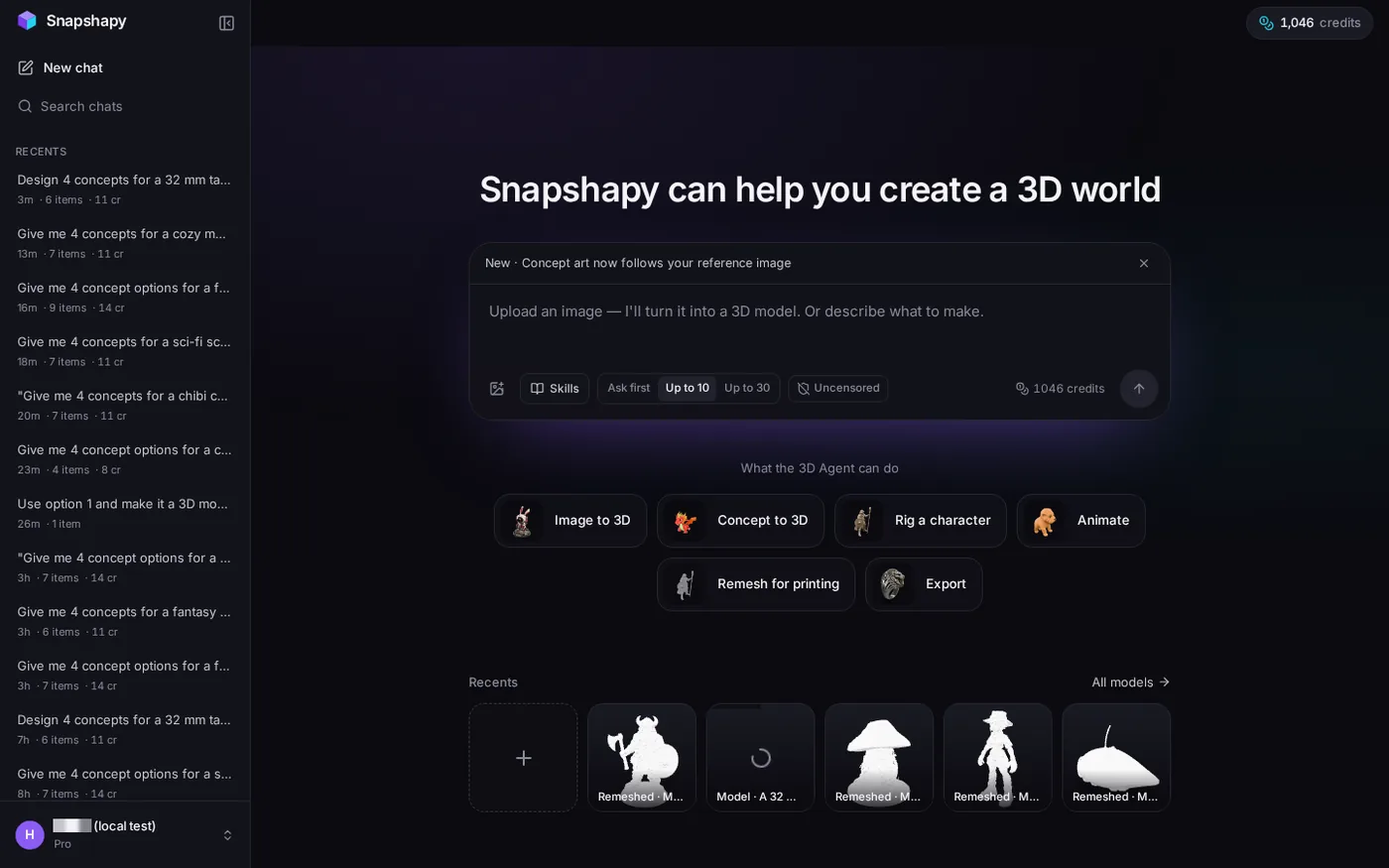 Snapshapy 3D Agent home with 1,046 credits before the test.
- Message 1, four concepts — Meshy 856 → 820 (-36) · Snapshapy 1,046 → 1,038 (-8) · 4.5×
- Message 2, textured 3D model — Meshy 820 → 790 (-30) · Snapshapy 1,038 → 1,035 (-3) · 10×
- Message 3, mobile version — Meshy 790 → 790 (0) · Snapshapy 1,035 → 1,035 (0)
- Whole chest — Meshy 66 credits · Snapshapy 11 credits, header "11 spent" · 6.0×
Both mobile passes were free, and that shapes the whole bill: every credit of the gap sits in the first two messages. The cheaper credit narrows it but cannot close it. At $0.02, 66 credits come to $1.32. At Starter's $0.0475, Snapshapy's 11 credits come to $0.52, so the dollar gap is 2.5× even after the better exchange rate.
 Meshy after the run: balance 790 (started at 856).
Neither side failed or retried a job, so these are clean one-pass prices to multiply out.
Four chest sketches at 9 credits apiece
Meshy answered message 1 with a card that read "4 paid actions need your approval", 9 credits each, Est. Total Cost 36, and a button labelled "Approve 4 selected".
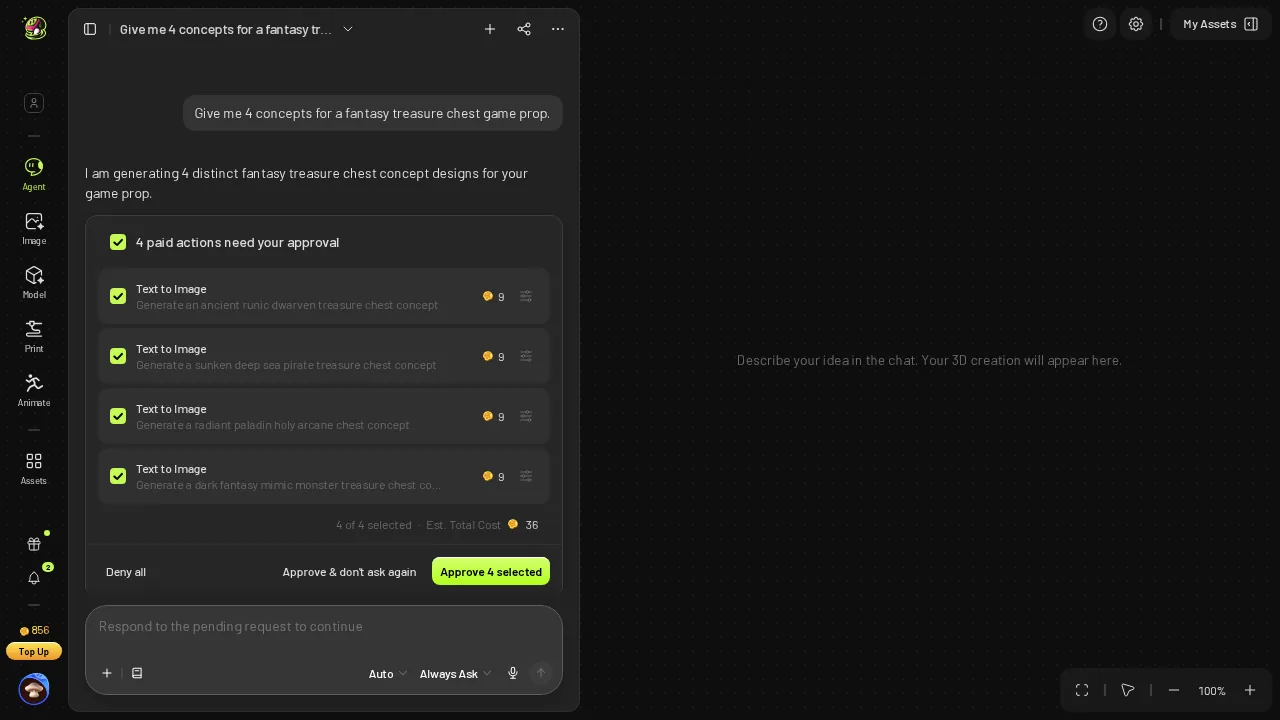 Meshy message 1: "4 paid actions need your approval", 9 credits each, Est. Total Cost 36.
About 310 s after I approved, the four images landed. Meshy's four concepts were genuinely different chests, and its 3D model later matched concept 1 closely.
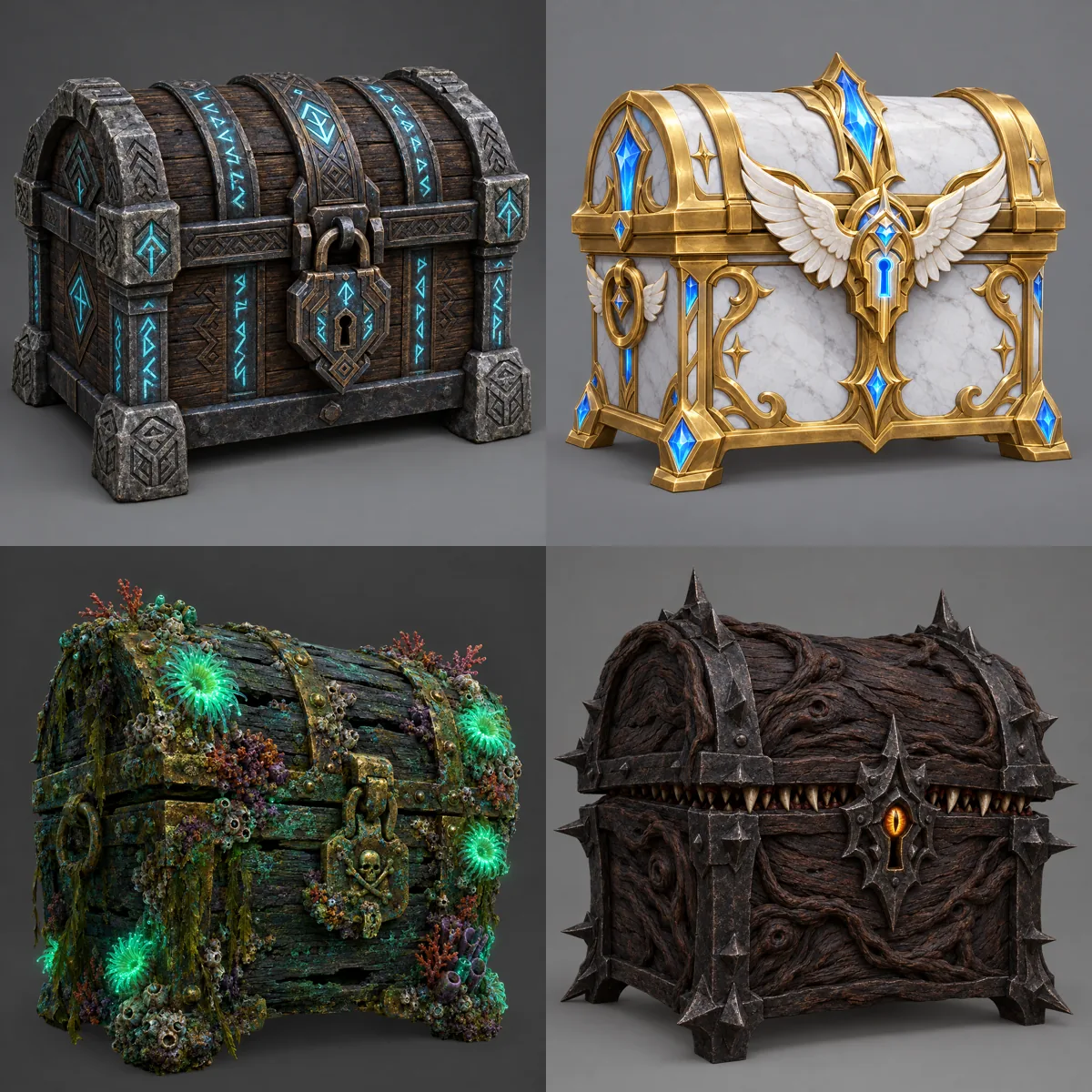 Meshy's four concepts: Dwarven Runic, Paladin Arcane, Deep Sea Coral, Mimic Monster.
Snapshapy replied within 9 s: "Four chest concepts are drawing now (8 credits)". There was no card to click. The four jobs ran in parallel at 32 to 43 s each, so all four single chests were ready at ≈43 s.
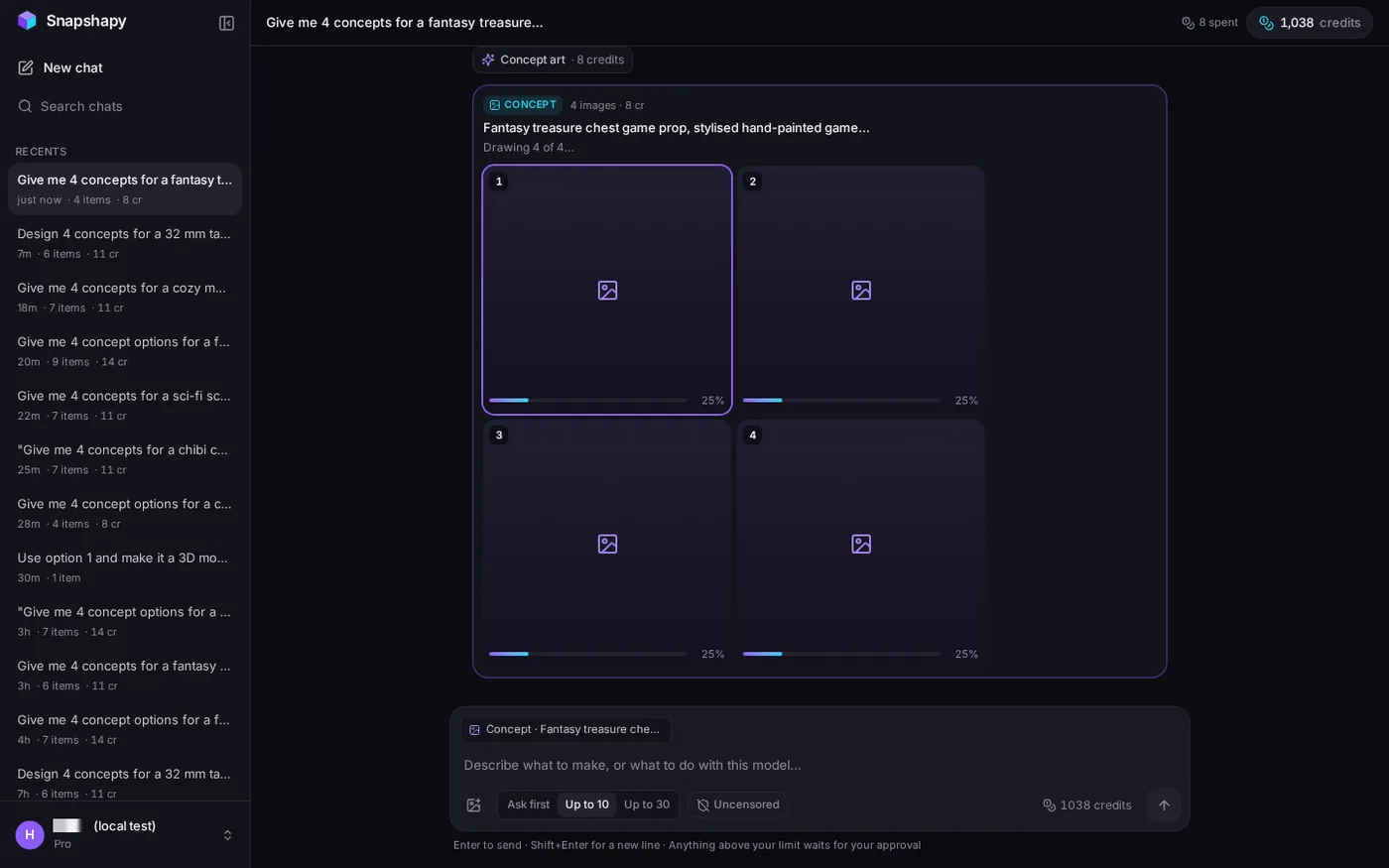 Snapshapy's reply to message 1: four concepts drawing at once, 8 credits, no approval.
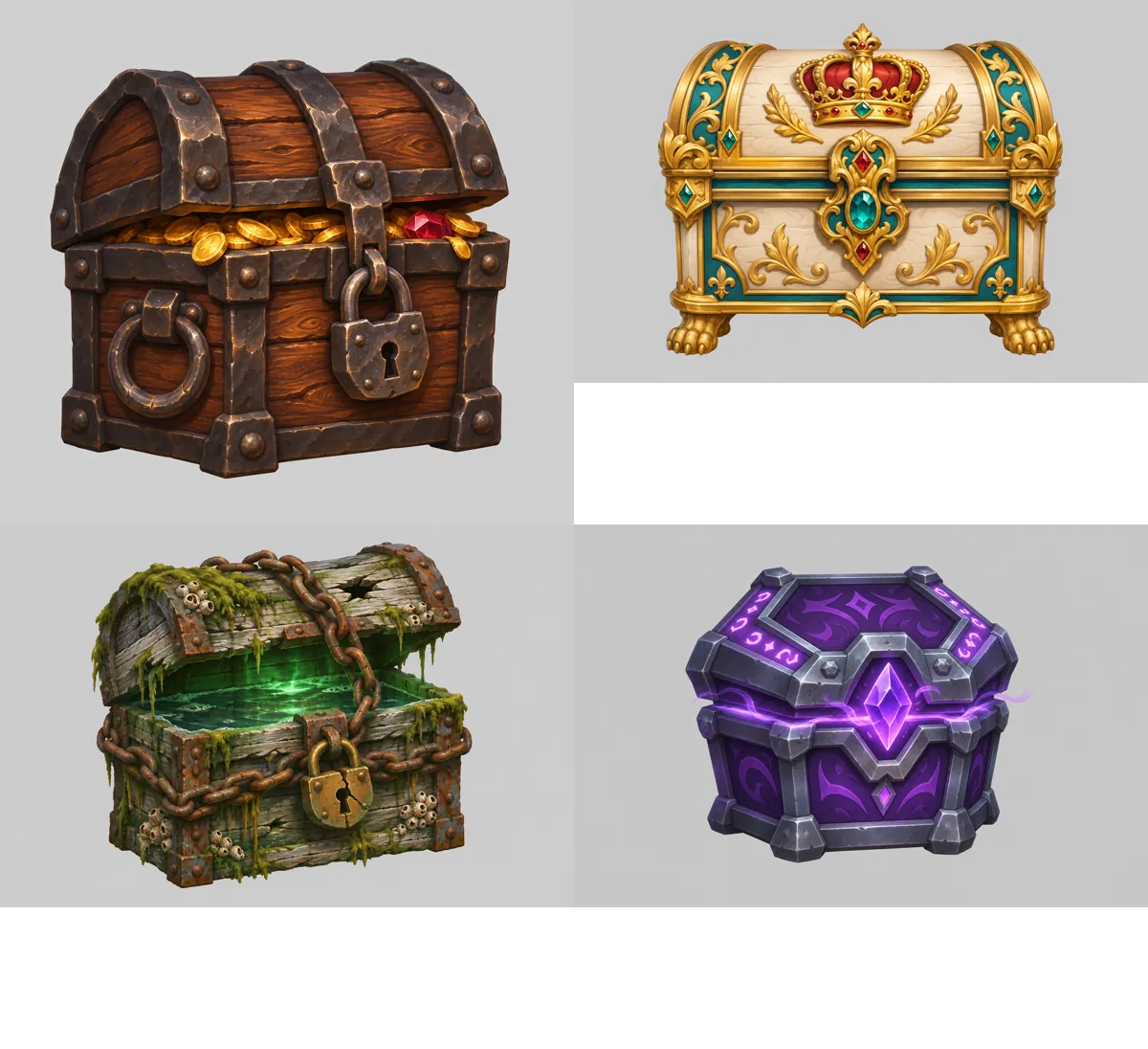 Snapshapy's four concepts: oak-and-iron with coins, ivory royal, mossy shipwreck, violet rune hex chest.
- Per concept image — Meshy 9 credits ($0.18) · Snapshapy 2 credits ($0.095) · 4.5×
- Four concepts — Meshy 36 credits ($0.72) · Snapshapy 8 credits ($0.38)
- Wait for the set — Meshy ≈310 s after approving · Snapshapy ≈43 s · 7.2×
Concept art is the step a prop pipeline repeats most. If a round misses and I ask for four more, Meshy bills another 36 credits, $0.72, more than half the price of a whole chest. The same second round on Snapshapy is 8 credits.
The 30-credit model of option 1
Message 2 brought Meshy's second card: Image to 3D, Meshy 7.1, Standard, texture size 4096, Est. Cost 30, and one "Approve" button. I clicked it, and the model was in about 139 s later.
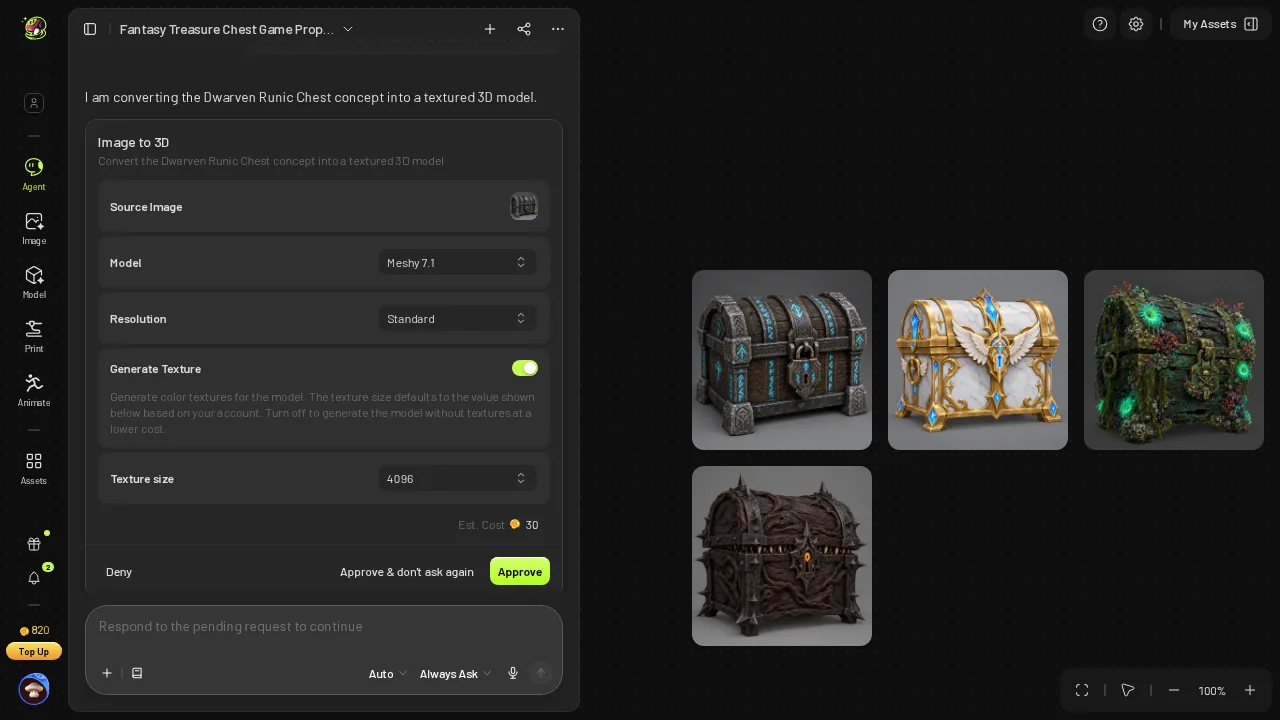 Meshy image-to-3D approval card: Meshy 7.1, Standard, texture 4096, Est. Cost 30.
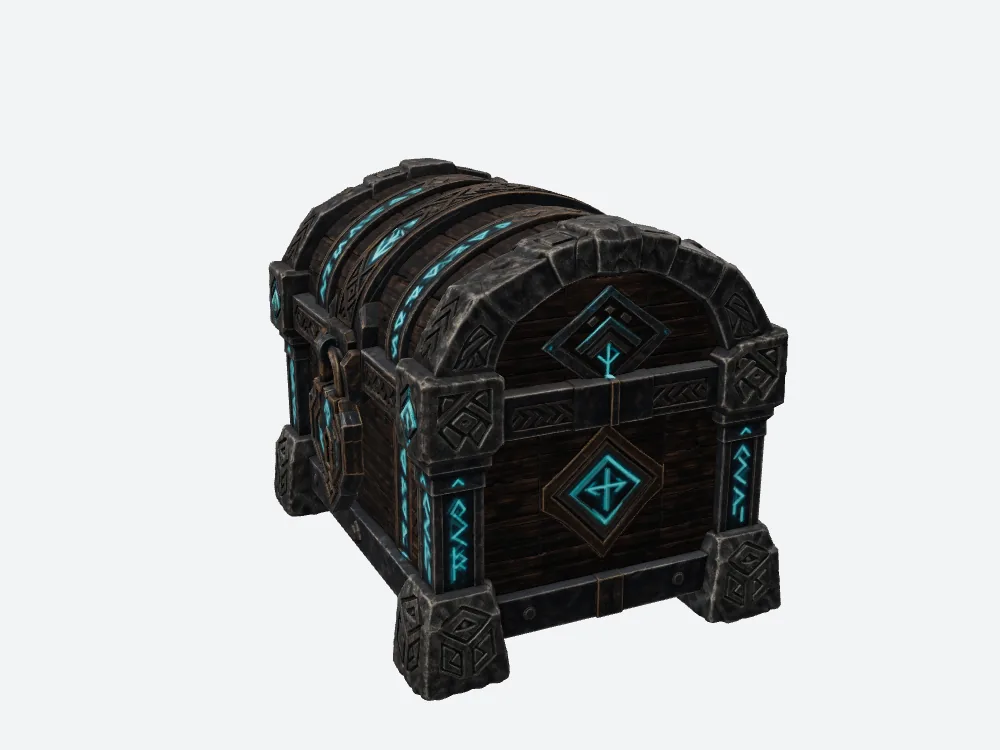 My offline render of Meshy's 3D model (2,052,398 triangles, 91.4 MB).
Snapshapy wrote "The first chest is building as a textured 3D model now (3 credits, 5–8 minutes)" and showed no card. One oak-and-iron chest with coins came back, matching concept 1.
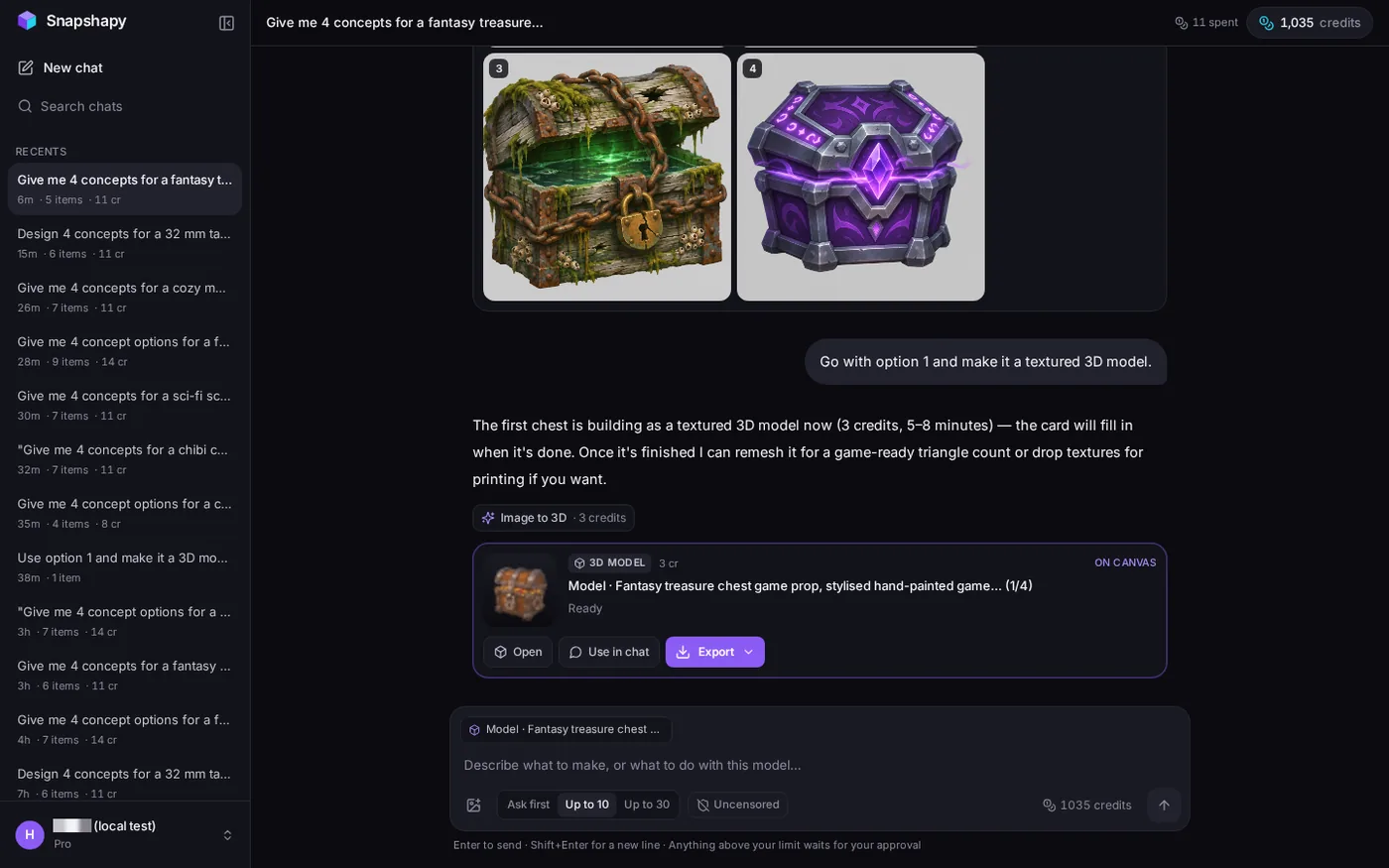 Snapshapy message 2: image-to-3D card ready, 3 credits, header "11 spent".
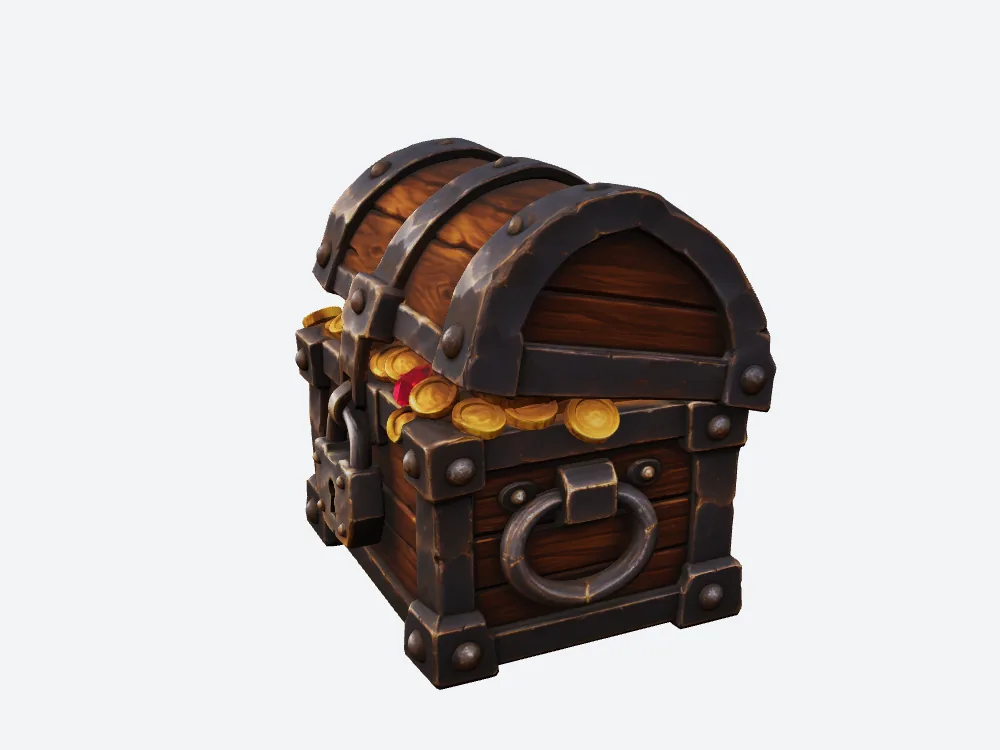 My offline render of Snapshapy's 3D model (1,499,758 triangles, 87.6 MB): one chest, matching concept 1.
- Image-to-3D — Meshy 30 credits ($0.60) · Snapshapy 3 credits ($0.14) · 10×
- Share of the chest's bill — Meshy 45% · Snapshapy 27%
- Output — Meshy 2,052,398 triangles, 91.4 MB GLB · Snapshapy 1,499,758 triangles, 87.6 MB GLB
Meshy's image-to-3D step was the quicker one, ≈139 s against Snapshapy's 335 s, so on time only the total job, ≈566 s against ≈390 s, leans Snapshapy's way. On money, this step is the widest ratio in the run: 10×, and 27 credits of the 55-credit gap.
The free mobile pass, and what it handed back
Message 3 was free on both sides, so it adds no money. It does add two asides.
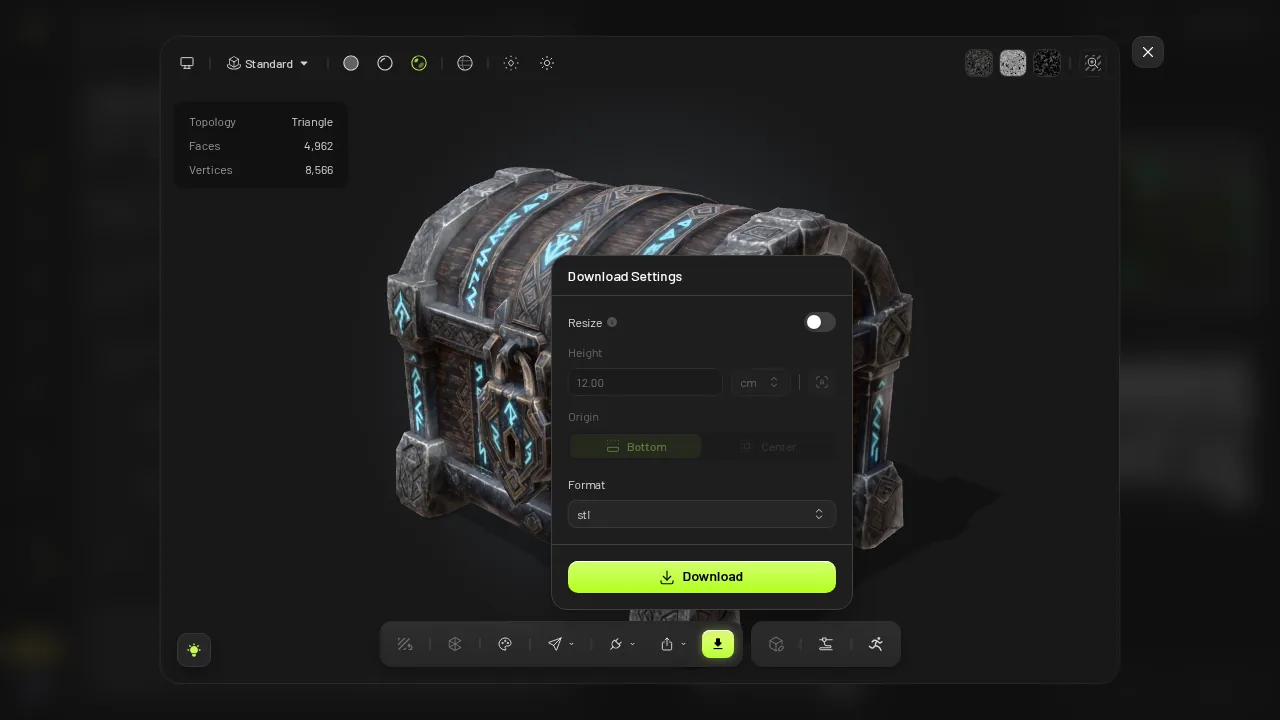
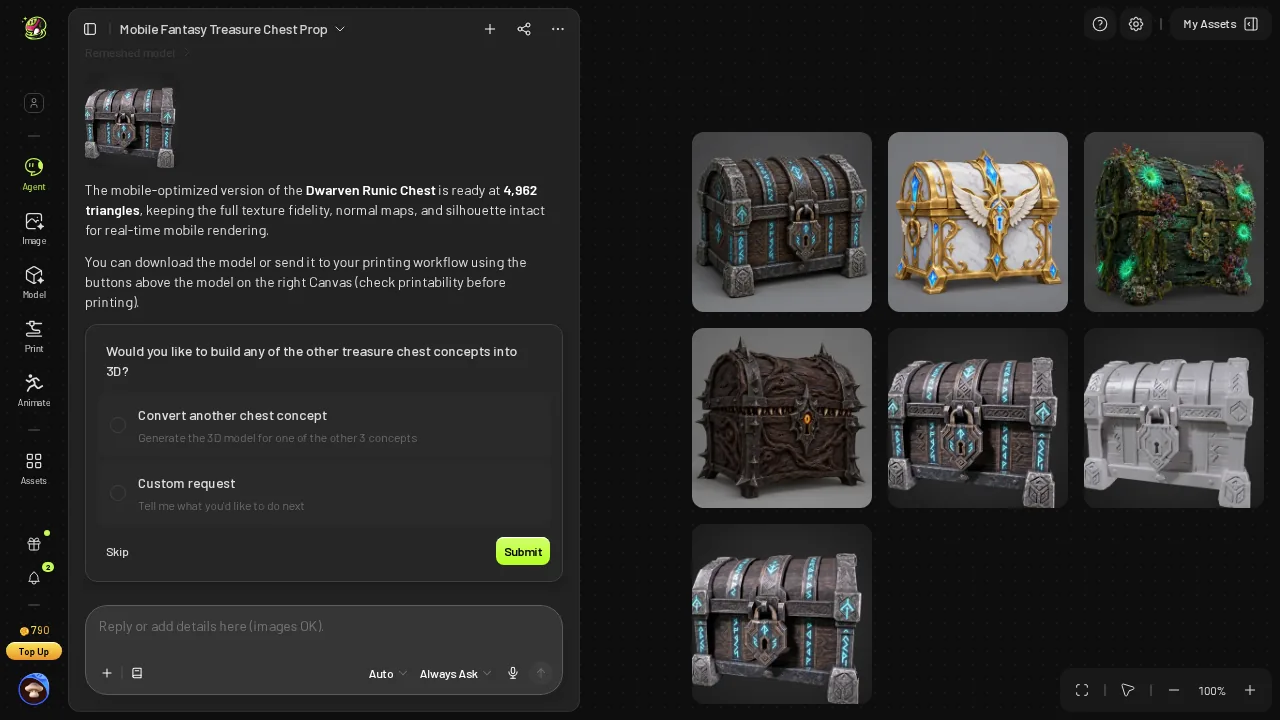 Meshy message 3 reply: "ready at 4,962 triangles, keeping … normal maps … intact".
Meshy answered after ≈117 s: "The mobile-optimized version of the Dwarven Runic Chest is ready at 4,962 triangles, keeping the full texture fidelity, normal maps, and silhouette intact for real-time mobile rendering." The GLB I downloaded weighs 37.0 MB, carries two 4096 × 4096 textures, and has no normal map in the file. Snapshapy's mobile GLB is 4.55 MB with three 1024 × 1024 textures, a normal map among them. The sibling articles take those two points apart.
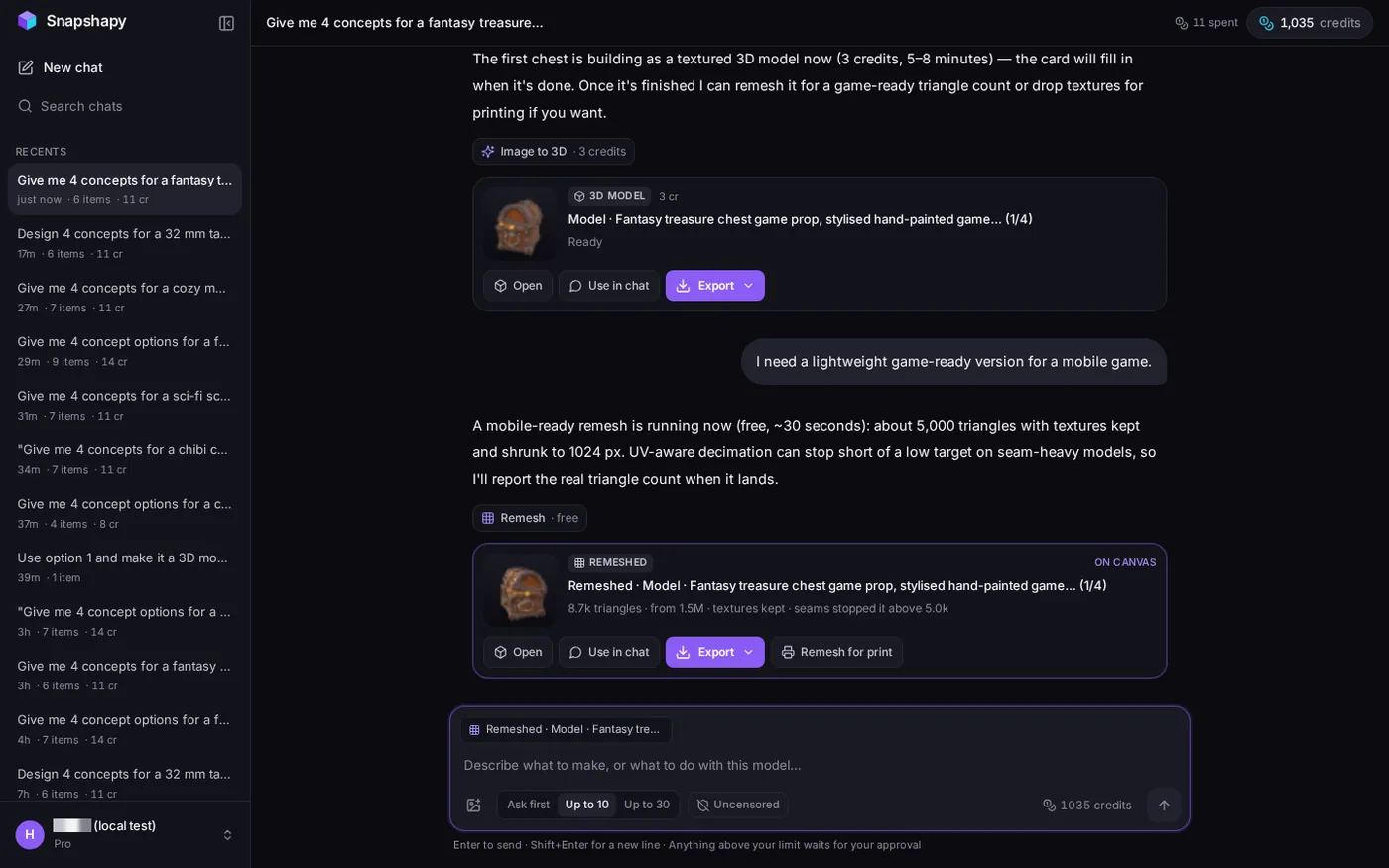 Snapshapy message 3: "about 5,000 triangles … shrunk to 1024 px"; card "8.7k triangles · seams stopped it above 5.0k".
Meshy kept the leaner mesh, 4,962 triangles against 8,654, and Snapshapy missed its own 5,000 target by 1.73×, though its card said so plainly: "seams stopped it above 5.0k".
- Mobile pass — Meshy 0 credits, ≈117 s · Snapshapy 0 credits, 12.1 s
- Mobile GLB — Meshy 37.0 MB · Snapshapy 4.55 MB
Two Approve clicks under "Always Ask"
Meshy's composer defaults to "Always Ask", so every paid action stops on a card until I click. On this chest that was "Approve 4 selected" for the concepts and "Approve" for the model. Message 3 was free and ran without a card. The choice card after the concepts I answered by typing message 2, so I do not count it.
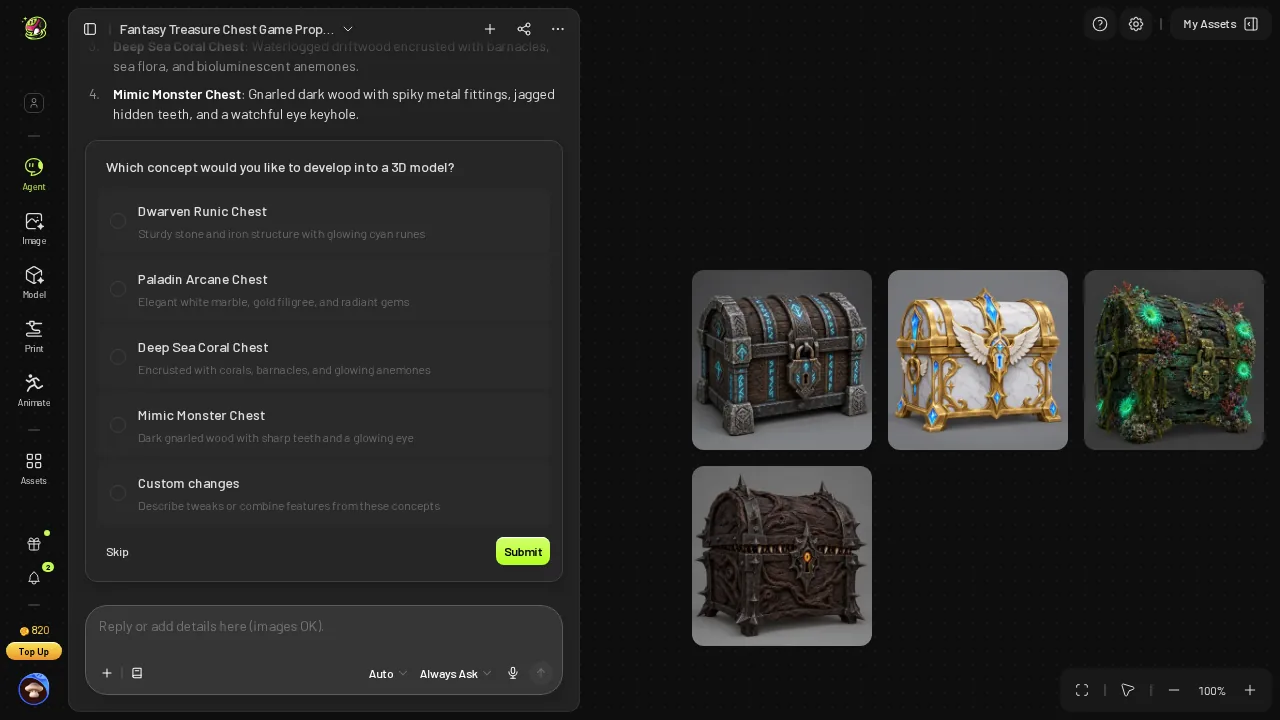 Meshy's four concepts on the canvas and the "which concept" choice card.
Credit where due: each card printed its price before a credit left my balance, and nothing on the bill surprised me. The cost is attention. The ≈310 s concept clock only starts once I come back and click, so the run cannot be left alone between messages.
Snapshapy's composer shows a default spend limit of "Up to 10" credits; anything above it waits for approval. Message 1 cost 8 and message 2 cost 3, so this run never crossed the limit and went straight through all three messages.
- Approve clicks per chest — Meshy 2 · Snapshapy 0
- Per ten chests — Meshy 20 · Snapshapy 0
- Per 30 chests — Meshy 60 · Snapshapy 0
Fifteen chests a month on Meshy Pro
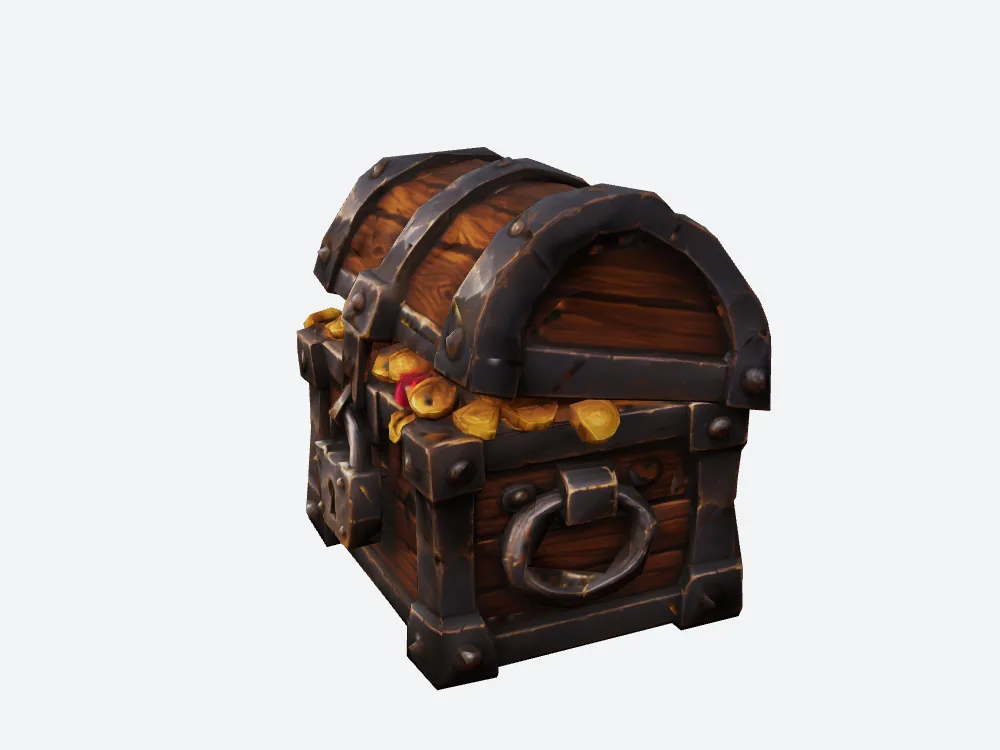 My render of Snapshapy's exported mobile GLB (4.55 MB, three 1024 textures).
- Meshy Pro, $20, 1,000 credits — 1,000 / 66 = 15 chests, 10 credits left over
- Snapshapy Starter, $19, 400 credits — 400 / 11 = 36 chests, 4 credits left over · 2.4× Meshy for $1 less
- Snapshapy Pro, $29, 600 credits — 600 / 11 = 54 chests, 6 credits left over · 3.6× Meshy
Meshy's bigger allowance is real: 1,000 credits against 400. Each chest draws 6.0× the credits from it, so the larger number buys the smaller shelf. The 10 leftover credits are not enough for even one more round of four concepts.
Ten chests for one game: 660 credits against 110
A mobile dungeon game wants loot variety: a wooden chest, a royal one, a cursed one, a mimic. Assume ten chest variants, each run exactly like this one.
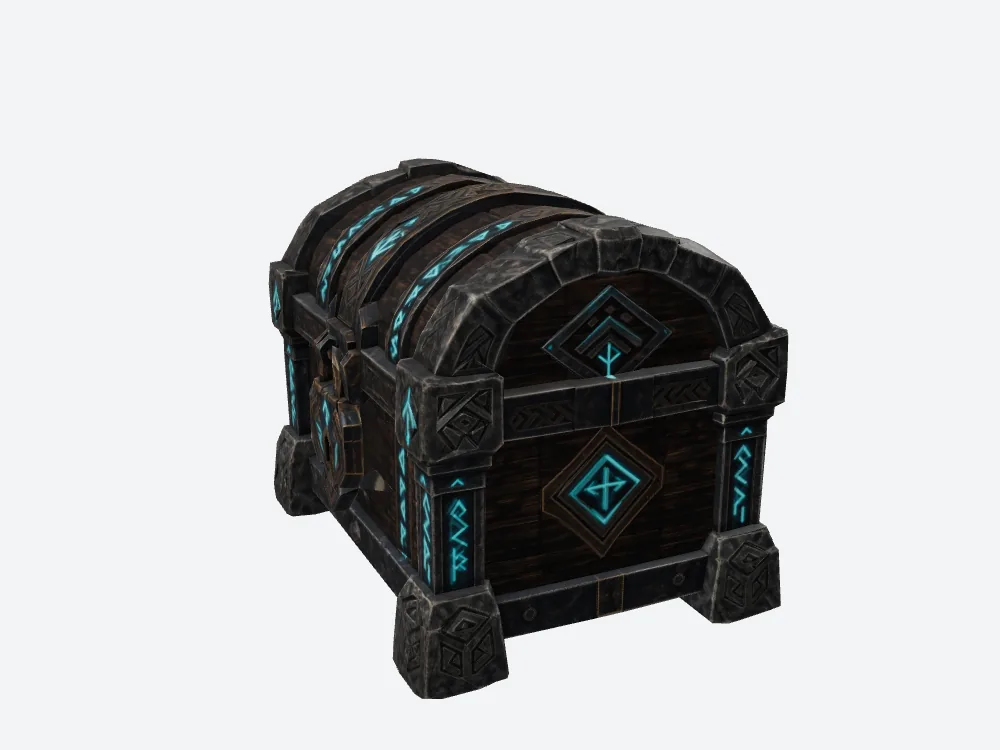 My render of Meshy's downloaded mobile GLB (37.0 MB).
- Credits — Meshy 660 · Snapshapy 110 · 6.0×
- Dollars — Meshy $13.20 · Snapshapy $5.20 at the Starter price
- Share of the plan month — Meshy 66% of Pro · Snapshapy 28% of Starter
- Approve clicks — Meshy 20 · Snapshapy 0
- Concept waits — Meshy 3,100 s, about 52 min · Snapshapy 430 s, about 7 min
- Total job time — Meshy ≈5,660 s, about 94 min · Snapshapy ≈3,900 s, 65 min
- Mobile files on disk — Meshy 370 MB · Snapshapy 45.5 MB
Ten chests still fit inside Meshy Pro, with 340 credits left. That is five more chests and nothing else for the month.
A 30-prop list over a release
Chests are one prop type. Say a small mobile release needs 30 props, each run like this chest. Then the gap is counted in plan months.
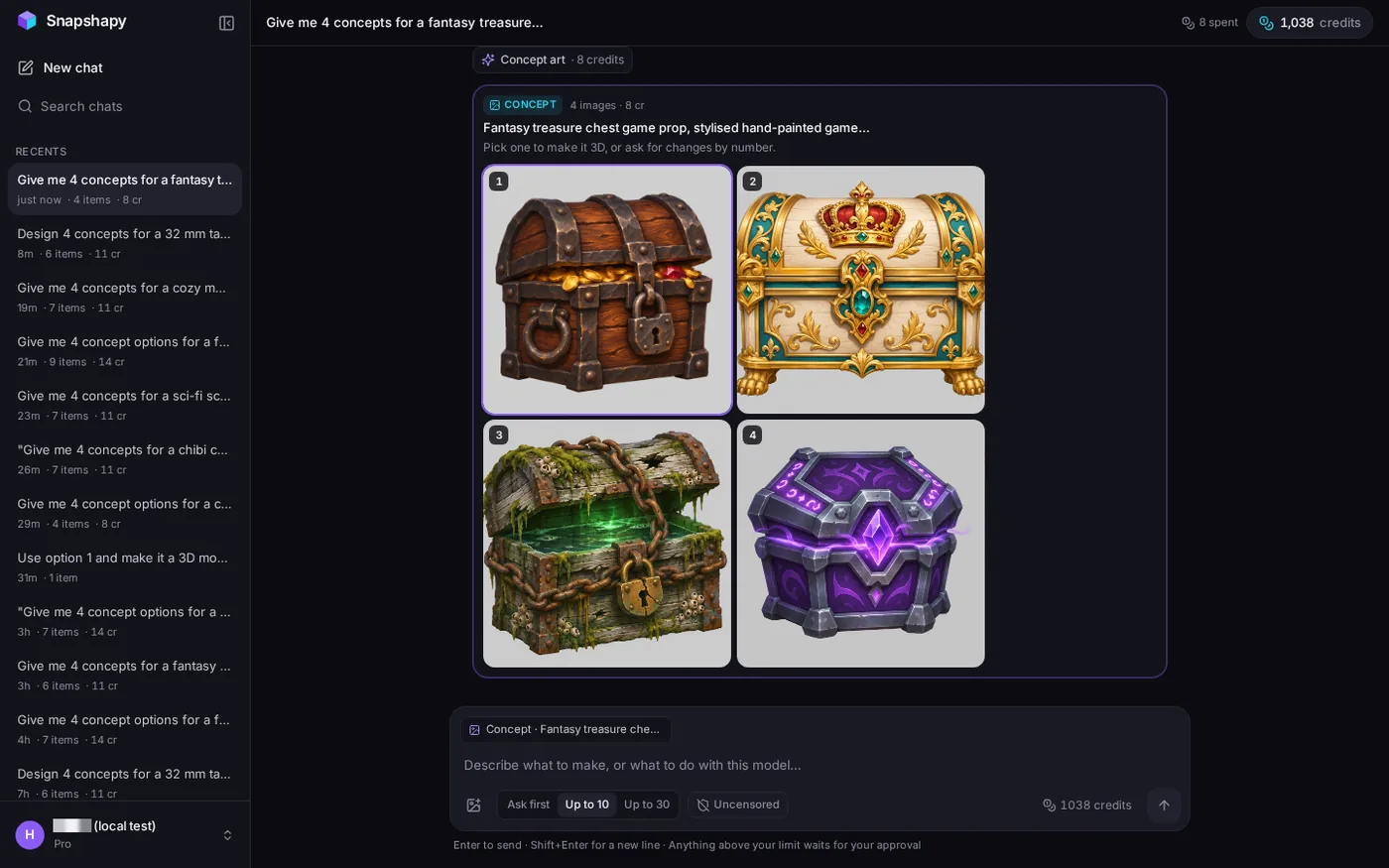 Snapshapy chat with the four concept cards ready; header "8 spent".
- Credits for 30 props — Meshy 1,980 · Snapshapy 330
- Plan months needed — Meshy two months of Pro, $40 · Snapshapy one month of Starter, $19, 70 credits to spare
- Approve clicks — Meshy 60 · Snapshapy 0
- Concept waits — Meshy 9,300 s, about 155 min · Snapshapy 1,290 s, about 21.5 min That last line is the one I would plan around. Meshy charges 36 credits for every round of four concepts, so iteration adds a fourth month of Pro on this list. On Snapshapy, the same iteration fits one $29 month.
Final verdict: Meshy 3D Agent scores 52/100 for a mobile game prop
Priced per prop, Meshy 3D Agent is the expensive way to fill a mobile game. One chest costs 66 credits against 11, $1.32 against $0.52, and two Approve clicks against none. A ~$20 month buys 15 chests on Meshy Pro and 36 on Snapshapy Starter. Ten chests run 660 credits, $13.20 and 20 approvals on Meshy against 110 credits, $5.20 and zero approvals. The money leaks are the 9-credit concept image and the 30-credit 3D step, 4.5× and 10× what Snapshapy charged.
Meshy keeps real points: a price on every card before it spends, concepts that were four distinct chests, and zero failed jobs or retries. None of that changes the arithmetic. At a prop list's scale, the 6.0× multiplier and the stop-and-click cards define the cost, and a 37.0 MB mobile file with no normal map adds hand work on top.
Which one I would use for this job
For building out a mobile game's prop list, I would use Snapshapy. Starter at $19 covers 36 chests a month at $0.52 each, the concept round costs 8 credits instead of 36, and the run never stopped for an approval under its "Up to 10" spend limit. The plans are at snapshapy.com.
If a team wants a priced approval card in front of every paid action, Meshy Pro at $20 does that, at 66 credits and $1.32 per chest.